
China’s Political Storm

Project Syndicate column internationally distributed.

As senior leaders are purged and retired provincial officials publicly call for Politburo members to be removed, it has become clear that China is at a crossroads. China’s future no longer looks to be determined by its hugely successful economy, which has turned the country into a world power in a single generation. Instead, the country’s murky and increasingly fractured politics are now driving its fate.

One need look no further than the ongoing power struggle in the run-up to this autumn’s planned leadership changes, or official figures showing that rural protests have been increasing at the same rate as China’s GDP. The sudden downfall of Bo Xilai — and the call from Yunnan Province for the removal of the two Politburo members closest to him — is just one example of the no-holds-barred infighting now taking place in Zhongnanhai, the closed leadership compound in Beijing. Indeed, the internecine squabbles are said to be so vicious that there have been rumors, denied by the regime, that the Communist Party’s congress at which a new president and prime minister are to be anointed this autumn, might be postponed.

The Party’s abrupt vilification of Bo after lauding him for his leadership in Chongqing has fueled public cynicism over his orchestrated downfall and laid bare the leadership’s thin ideological core. If China is to preserve its gains in global stature, it must avoid a political hard landing. For the time being, at least five different scenarios are conceivable.

Re-equilibration: The Party protects its legitimacy, keeps the military subordinate, and manages to put a lid on popular dissent. In other words, the status quo prevails for the foreseeable future. This is the least likely scenario, owing to deepening internal Party disagreements and rising popular discontent.

Implosion: This likelihood of political disintegration, economic collapse, and social disorder may be no higher than that of re-equilibration. The government’s fixation on weiwen, or stability maintenance, has resulted in China becoming the world’s only important country whose official internal-security budget is larger than its official national-defense budget.

This underscores the extent to which authorities have to carry out internal repression to perpetuate one-party rule and maintain control over the restive ethnic-minority homelands that make up more than 60% of China’s landmass. But it may also explain why one self-immolation in Tunisia helped to kindle the Arab Spring, whereas some three dozen self-immolations by Tibetan monks and nuns have failed to ignite a similar popular movement against the Chinese state.

The Soviet Union imploded because the party was the state, and vice versa. China, by contrast, has established strong institutional capacity, a multi-tiered federal structure, a tradition of civilian leadership turnover every ten years, and a well-oiled, sophisticated security apparatus that has kept pace with technological advances. Thus, China’s government can pursue a policy of wai song nei jin — relaxed on the outside, vigilant internally.

Guided reform: A process of gradual political change begins, in keeping with outgoing Premier Wen Jiabao’s warning that without “urgent” reforms, China risks turmoil and disruption of economic growth. Can China emulate the recent example of neighboring Myanmar (Burma), which has initiated significant, if still tenuous, political reforms?

As the political heirs of the country’s Communist revolutionaries, the third-generation leaders that are taking over the reins of power in China may possess a strong pedigree, but they are also scarred and limited by it. These so-called princelings are trapped in the same political culture that led to the death of millions of Chinese and the continuing repression of opponents (real or imagined). They do not look like political reformers in the slightest.

Great leap backward: A new “Cultural Revolution” erupts, as the clique in power ruthlessly seeks to suppress dissent within and outside the establishment. As the Dalai Lama recently warned, there are still plenty of “worshippers of the gun” in power in China. Indeed, such is China’s political system that only the strongest advance. One fallen princeling, Bo, has been accused of cruelty and corruption — traits that are endemic in China’s cloistered but fragmented oligarchy, which values family lineage and relies on networks of allies.

Praetorian takeover: The People’s Liberation Army rules from behind a civilian mask, increasingly calling the shots with government officials, who are beholden to it. While the civilian leadership has become diffuse (every Chinese leader since Mao Zedong has been weaker than his predecessor), the military has enjoyed greater autonomy and soaring budgets since 1990. Indeed, the Party, having ceased to be a rigid monolith obedient to a single leader, has become dependent on the military for its political legitimacy and to ensure domestic order.

The PLA’s growing political clout has been manifest in the sharpening power struggle within the Party. In recent weeks, an unusual number of senior military officers have published articles in official newspapers calling for Party discipline and unity, and alluding to the military’s role in containing the infighting.

Another development is the increasing tendency of military generals to speak out of turn on strategic issues and undercut diplomatic strategy. The simple truth is that the foreign ministry is the Chinese government’s weakest branch, often overruled or simply ignored by the security establishment, which is ever ready to upstage even the Party.

China’s internal politics has a bearing on its external policy. The weaker the civilian leadership has become, the more China has been inclined to discard Deng Xiaoping’s dictum tao guang yang hui (hide brightness, nourish obscurity). China has lately taken more to the spotlight than to the shadows. Under any plausible scenario, a restrained and stable Chinese foreign policy may become more difficult.

Brahma Chellaney, Professor of Strategic Studies at the New Delhi-based Center for Policy Research, is the author of Asian Juggernaut and Water: Asia’s New Battleground.
(c) Project Syndicate, 2012.

Is the U.S.-India relationship losing steam?

Brahma Chellaney, Japan Times, June 7, 2012

WASHINGTON — Was the U.S.-India strategic partnership oversold to the extent that it has failed to yield tangible benefits for the United States? Even as Secretary of State Hillary Clinton has just held detailed discussions in New Delhi, an increasing number of analysts in Washington have already concluded that the overhyped relationship is losing momentum.

The skeptics cite two high-visibility issues in particular: India’s rejection of separate bids by Lockheed Martin Corp. and Boeing Co. to sell 126 fighter-jets, and New Delhi’s reluctance to snap energy ties with Iran. The discussion over these issues, however, obscures key facts.

Take the aircraft deal.  Despite that setback, U.S. firms have clinched several other multibillion-dollar arms deals in recent years. These contracts have been secured on a government-to-government basis, without any competitive bidding.  But in the one case where India invited bids, American firms failed to make it beyond the competition’s first round because they did not match the price and other terms offered by the French manufacturer of the Rafale aircraft and the European consortium that makes the Eurofighter Typhoon.

The most-startling yet little-publicized fact is America’s quiet emergence as the largest arms seller to India. In the decade since President George W. Bush launched the vaunted U.S.-Indian strategic partnership, India has fundamentally reoriented its defense procurement, moving away from its traditional reliance on Russia. Indeed, nearly half of all Indian defense deals by value in recent years have been bagged by the U.S. alone, with Israel a distant second and Russia relegated to the third slot.

Given that India has become the world’s largest arms importer and the United States remains the biggest exporter, U.S. firms are set to secure more contracts in India, which plans to spend more than $100 billion over the next four years to upgrade its military capabilities, including by buying submarines, heavy lift and attack helicopters, howitzers, and tanks.

Now consider the Iran issue. Just as the Indian rejection of the Boeing’s F/A 18 and Lockheed-Martin’s F-16 bids has made big news but the U.S. landing of multiple arms contracts has received little notice, India’s reluctance to publicly support U.S. energy sanctions on Iran has been in the spotlight but not the quiet Indian strategy since the late 1990s to let the share of Iranian oil in India’s energy imports gradually decline — a trend that has seen the importance of Iranian oil supplies for India considerably weaken.

Few in India consider Iran a friend. But given India’s troubled neighborhood, with the country wedged in an arc of problematic states, New Delhi is reluctant to rupture its ties with Iran, its gateway to Afghanistan — the top recipient of Indian aid. India already has paid a heavy price for taking America’s side on some critical issues in its long-running battle against Iran, even though Washington doesn’t take India’s side in its disputes with China or Pakistan.

The Bush administration persuaded India not to conclude any new long-term energy contracts with Iran, and — in return for a civil nuclear deal with the U.S. — abandon its plan to build a gas pipeline from Iran. New Delhi, by voting against Iran at the International Atomic Energy Agency’s governing board in 2005 and 2006, invited Iranian reprisal in the form of cancellation of a 25-year, $22-billion liquefied natural gas deal which had terms highly favorable to India. That deal’s scrapping alone left India poorer by several billion dollars.

Now the U.S. energy embargo against Iran has pushed international oil prices higher, significantly increasing India’s oil bill. The embargo also threatens to undercut India’s import-diversification strategy by making it place most of its eggs in the basket of the Islamist-bankrolling, Saudi Arabia-led oil monarchies that continue to play a role in South Asia detrimental to Indian interests. In fact, thanks to the U.S. embargo against Iran, the swelling coffers of the iron-fisted oil sheikhdoms are set to overflow, increasing their leverage in the region and beyond.

Lost in the U.S. public discussion is an important fact — the declining share of Iranian crude in India’s total oil imports as part of a conscious Indian effort to reduce supply-disruption risks linked with the lurking potential for Iran-related conflict. Since 2008 alone, Iranian oil imports have swiftly fallen from 16.4 percent to 10.3 percent. Given India’s soaring oil imports and search for new sources of supply, the Iranian share is set to decline further, even without India’s participation in the U.S. embargo.

Make no mistake: India shares U.S. objectives on Iran but the exigencies of its regional situation compel it to toe a more cautious line.

The repositioning of the U.S.-India relationship was never intended to be transactional. Rather it was designed as an important geostrategic move to underpin Asian security and serve the long-term U.S. and Indian interests. But even if the relationship were viewed in transactional terms, the U.S. has reaped handsome dividends.

On Iran, the right course for U.S. policy would be to encourage India to continue reducing Iranian oil imports by granting it a waiver from American sanctions law — as Washington has to Japan and nine other countries — and by helping to finance the retrofitting of Indian refineries that presently have a technical capacity to process only Iranian oil.

More fundamentally, just as the Bush administration exaggerated the importance of a single deal with India, contending that the nuclear deal would be fundamentally transformative, it is an overstatement that the U.S.-India relationship today is losing momentum. The geostrategic direction of the relationship is irreversibly set — toward closer collaboration. Even trade between the countries has continued to grow impressively, from $9 billion in 1995 to $100 billion in 2011. While it is too much to expect a congruence of U.S. and Indian national-security objectives in all spheres, the two countries are likely to deepen their cooperation in areas where their interests converge, such as ensuring Asian power equilibrium.

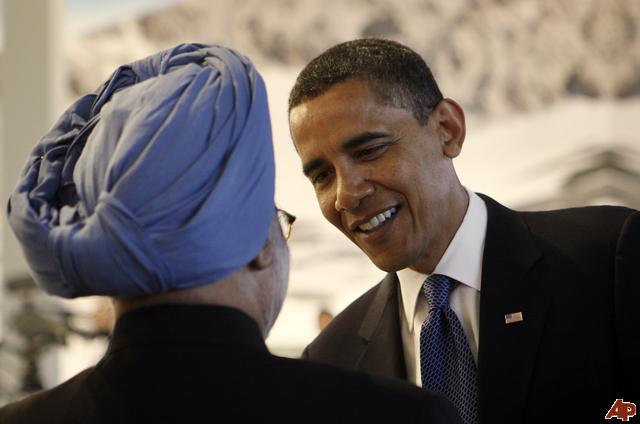
Barack Obama had stroked India’s collective ego by inviting Indian Prime Minister Manmohan Singh for his presidency’s first state dinner, leading to the joke that while China gets a deferential America and Pakistan secures billions of dollars in U.S. aid periodically, India is easily won over with a sumptuous dinner and nice compliments.

The mutual optimism and excitement that characterized the blooming U.S.-Indian ties during the Bush years, admittedly, has given way to more realistic assessments as the relationship has matured. Geostrategic and economic forces, however, continue to drive the two countries closer. Indeed, Obama’s recent pivot to Asia has made closer U.S. strategic collaboration with India critical.

(c) The Japan Times, 2012.

A Dam-Building Race in Asia: How to Contain the Geopolitical Risks

Brahma Chellaney

A paper published by The Transatlantic Academy, Washington, DC, May 2012

Introduction 

Asia’s phenomenal economic rise has attracted a lot of attention in international policy circles but the sharpening water competition this growth has triggered is less well known. Water has emerged as a source of increasing competition and underlying discord between many Asian nations, spurring new tensions over the resources of transnational rivers. Asia’s fastest-growing economies are all at or near water-stressed conditions, underscoring how water shortages threaten to hamper the continent’s continued rapid economic growth. For investors, the Asian water crisis carries risks that are at least as potentially damaging as nonperforming loans, real estate bubbles, and political corruption.
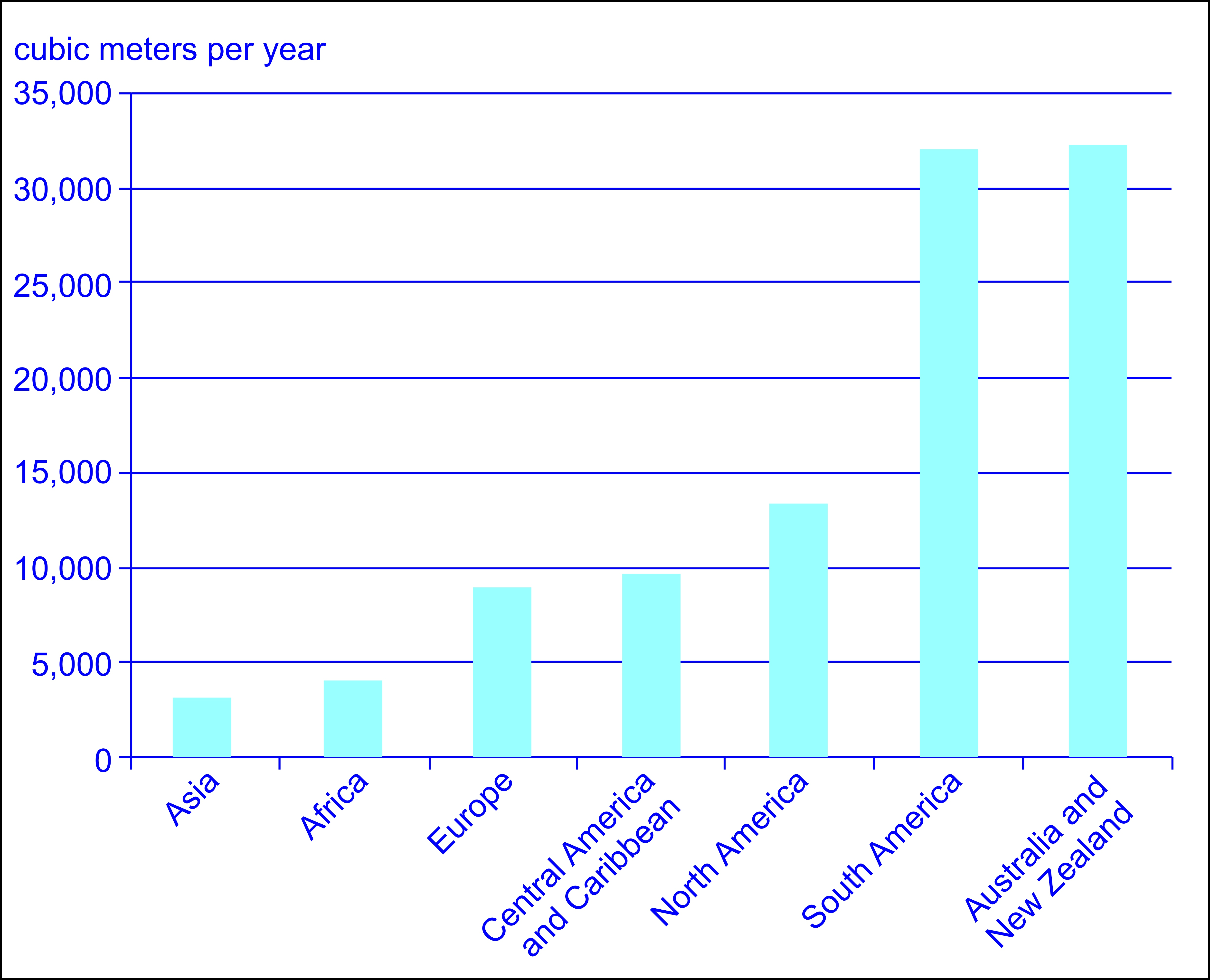
Dam building on transnational rivers is at the heart of the inter-riparian tensions in Asia. Asia is already the world’s most dam-dotted continent: It has more dams than the rest of the world combined. Yet the numerous new dam projects in Asia show that the damming of rivers is still an important priority for policymakers. In the West, dam building has largely petered out. In Asia, however, the construction of new dams continues in full swing.

Like arms racing, “dam racing” has emerged as a geopolitical concern in Asia, where the world’s fastest economic growth is being accompanied by the world’s fastest increase in military spending and the world’s fiercest competition for natural resources, especially water and energy. As riparian neighbors compete to appropriate resources of shared rivers by building dams, reservoirs, barrages, irrigation networks, and other structures, the relationships between upstream and downstream states are often characterized by mutual distrust and discord.

This paper warns that just as the scramble for energy resources has defined Asian geopolitics since the 1990s, the struggle for water is now likely to define many inter-country relationships. At a time when many territorial disputes and separatist struggles in Asia are being driven by resource issues — extending from the energy-rich South and East China Seas to the water-rich Tibet and Kashmir — water indeed is becoming the new oil. But unlike oil — dependence on which can be reduced by either tapping other sources of energy or switching to other means of generating electricity — there is no substitute for water. Asian economies are the world’s leading importers of resources like mineral ores, hydrocarbons, and timber, importing them from distant lands. But they have no such import choice on water.

The paper, drawing on the author’s book on Asian water challenges published last fall by the Georgetown University Press, examines how the rising geopolitical risks arising from the dam-building competition can be stemmed. It does so by examining the broader water tensions and competition, which center on four distinct zones: China and its neighbors; South Asia; Southeast Asia; and Central Asia, where the Soviet Union’s disintegration left a still-festering water discord among the five so-called “stans” — Kazakhstan, Uzbekistan, Kyrgyzstan, Tajikistan, and Turkmenistan.

The overexploitation of river resources has only promoted unbridled groundwater extraction, resulting in rapidly falling water tables across much of Asia. The scope of this paper, however, is limited to analyzing how the resources of shared rivers have become the target of rival appropriation plans, in what can be described as a silent hydrological warfare. Driving the rival dam-building plans and the accompanying water nationalism is the notion that sharing waters is a zero-sum game. The danger that the current or new riparian disputes may escalate to conflict looms large on the Asian horizon, with important implications for Asia’s continued rapid economic-growth story and for inter-riparian relations.

Different continents’ water resources

The challenges posed by the frenetic dam building, however, come with new opportunities to break with business as usual and adopt water conservation and efficiency as well as cooperative approaches in order to help sustainably manage shared water resources and underpin mutual development goals and environmental security. What Asia  needs is institutionalized water cooperation between co-riparian states, with clear rules on building dams on transnational rivers, so as to minimize apprehensions and promote greater regional cooperation.

Only cooperative water institutional mechanisms can help mitigate the risks arising from the rush to dam rivers and create an upstream hydroengineering infrastructure that could potentially arm upstream states with tremendous political and economic leverage over downriver nations. Such cooperation will need to be based on transparency, information sharing, independent environmental impact assessment, dispute-settlement mechanisms, water pollution control, and a mutual commitment to refrain from undertaking projects that could materially diminish transboundary river flows.

Download the full paper here.

Water Diplomacy: Skating on Thin Ice

Brahma Chellaney, The Economic Times, May 10, 2012

The Teesta River flowing through the northern part of India’s West Bengal state

With power in India shifting to the states due to an increasingly weak central government, Secretary of State Hillary Clinton chose Calcutta as the first stop of her India tour to advance U.S. foreign-policy interests. In a televised interview before meeting with West Bengal Chief Minister Mamta Banerjee, Ms. Clinton pushed for India permitting foreign direct investment in multi-brand retail and for an “amicable” water-sharing arrangement with Bangladesh on the Teesta River — issues stalled by Ms. Banerjee’s opposition.

The art of persuasion and co-option is central to leadership — a capability Prime Minister Manmohan Singh has failed to demonstrate, even as his politically precarious government lurches from one crisis to another. The result has been a series of delays on critical decisions as well as policy reversals — all conveniently blamed on allies, including powerful regional satraps. This tendency to pass the buck has prompted foreign leaders to directly woo key chief ministers.

Take the water issue. The Indian Constitution has left water as a state-level subject, rather than making it a federal issue. Yet Singh’s government has sought to dictate the terms of a Teesta water-sharing treaty with Bangladesh to West Bengal, although that state’s interests are directly at stake. Indeed, New Delhi first negotiated the terms of the pact with Dhaka — generously loaded in Bangladesh’s favour — and then sought to present West Bengal with a fait accompli.

Respect for states and their interests is the essence of federalism.  Yet this inclination to ride roughshod over states harks back to the days when the central government was exceptionally strong.

Jawaharlal Nehru ignored the interests of Jammu and Kashmir and, to a lesser extent, Punjab when he signed the 1960 Indus Waters Treaty, under which India bigheartedly agreed to the exclusive reservation of the largest three of the six Indus-system rivers for downstream Pakistan. In effect, India signed an extraordinary treaty indefinitely setting aside 80.52 percent of the Indus-system waters for Pakistan — the most generous water-sharing pact thus far in modern world history.

In fact, the volume of waters earmarked for Pakistan from India under the Indus treaty is more than 90 times greater that what the U.S. is required to release for Mexico under the 1944 U.S.-Mexico Water Treaty, which stipulates a minimum transboundary delivery of 1.85 billion cubic meters of the Colorado River waters yearly. While Ms. Clinton’s advocacy of a Teesta treaty is understandable, the U.S. hasn’t set a good example in the Colorado Basin. The  waters of the once-mighty Colorado River are siphoned by seven American states, leaving only a trickle for Mexico.

The Indus treaty was negotiated in a period when water shortages were relatively unknown in most parts of India. Nehru did not envisage that water resources would come under serious strain due to developmental and population pressures. Today, as the bulk of the Indus system’s waters continue to flow to an adversarial Pakistan waging a war by terror, India’s own Indus basin, according to the 2030 Water Resources Group, is reeling under a massive 52 percent deficit between water supply and demand.

Worse still, the Indus treaty has deprived Jammu and Kashmir of the only resource it has — water. The state’s three main rivers — the Chenab and the Jhelum (which boast the largest cross-border discharge of all the six Indus-system rivers) and the main Indus stream — have been reserved for Pakistan’s use, thereby promoting alienation and resentment in the Indian state.

This led the Jammu and Kashmir state legislature to pass a bipartisan resolution in 2002 calling for a review and annulment of the Indus treaty. To help allay popular resentment in the state over the major electricity shortages that are hampering its development, the central government subsequently embarked on hydropower projects like Baglihar and Kishenganga. But Pakistan — as if seeking to perpetuate the popular alienation in the Indian state — took the Baglihar project to a World Bank-appointed international neutral expert and Kishenganga to the International Court of Arbitration, which last year stayed all further work on the project.

The proposed Teesta pact suggests that India has learned no lesson from its experience over the Indus treaty. The Teesta originates in Sikkim state and meets the Brahmaputra in Bangladesh. The long-term interests of northern West Bengal, for which the Teesta is a lifeline, must be protected.

Water, as an indispensable resource that is increasingly in short supply, tends to raise emotive and politically surcharged issues. Singh’s government has unwisely brought India under pressure by portraying Ms. Banerjee as the sole holdout on the Teesta treaty. It has also fed the media attacks on Ms. Banerjee over that issue. Meanwhile, seeking to up the ante by latching on Ms. Clinton’s comments, Bangladesh Foreign Minister Dipu Moni has warned that Indo-Bangladesh ties “will take a huge hit” if India does not deliver on the Teesta issue.

India, which has just announced a decision to magnanimously write off $200 million of its $1 billion new loan to Dhaka, must continue to generously help Bangladesh — but on the basis of concrete reciprocity. India is already a party to a water-sharing treaty with Bangladesh involving a bigger river, the Ganges.

Its 1996 Ganges treaty guarantees Bangladesh minimum cross-border flows in the dry season — a new principle in international water relations. In fact, the treaty almost equally divides the downstream Ganges flows between the two countries. In concluding the treaty, India climbed down from its long-stated position that it needed a minimum of 40,000 cubic feet of water per second of time (“cusecs”) to flush silt from the Calcutta port. India settled for each side getting 35,000 cusecs of water in alternative ten-day periods during the driest period from March to May.

The treaty helped bury the hatchet over India’s diversion of water through the Farakka Barrage to a Ganges tributary, the Bhagirathi-Hooghly, to help flush silt and keep the Calcutta Harbour operational during the dry season. The treaty’s complex water-sharing arrangement is pivoted on joint oversight of flows to help build mutual trust. And unlike the Indus treaty, which was brokered by the U.S. and the World Bank, the Ganges treaty emerged without the involvement of a third party, despite a U.S. offer of mediation.

Bangladesh and India are also likely to sign — without any third-party role — a Teesta treaty in what will be the world’s first water-sharing pact of the 21st century. Bangladesh insists it get half of the Teesta waters, although most of the river’s waters are generated in India. Existing water-sharing treaties elsewhere in the world do not come anywhere close to allocating half of all waters to the downstream state. India has the dubious distinction of signing the most generous water-sharing pacts with downstream states, even as it has failed to get upstream China to  accept the very concept of water sharing.

India faces difficult choices on water. Unlike Bangladesh, it is already a water-stressed country. Whereas the per-capita water availability in Bangladesh is 8,252 cubic meters per year, according to United Nations data, it has fallen to a paltry 1,560 cubic meters in India.

(c) The Economic Times, 2012.

The Resistible Rise of Asia?

A favorite theme in international debate nowadays is whether Asia’s rise signifies the West’s decline. But the current focus on economic malaise in Europe and the United States is distracting attention from the many serious challenges that call into question Asia’s continued success.

To be sure, today’s ongoing global power shifts are primarily linked to Asia’s phenomenal economic rise, the speed and scale of which have no parallel in world history. With the world’s fastest-growing economies, fastest-rising military expenditures, fiercest resource competition, and most serious hot spots, Asia obviously holds the key to the future global order.

But Asia faces major constraints. It must cope with entrenched territorial and maritime disputes, such as in the South China Sea; harmful historical legacies that weigh down its most important interstate relationships; increasingly fervent nationalism; growing religious extremism; and sharpening competition over water and energy.

Moreover, Asia’s political integration badly lags behind its economic integration, and, to compound matters, it has no security framework. Regional consultation mechanisms remain weak. Differences persist over whether a security architecture or community should extend across Asia, or be confined to an ill-defined “East Asia.”

One central concern is that, unlike Europe’s bloody wars of the first half of the twentieth century, which made war there unthinkable today, the wars in Asia in the second half of the twentieth century only accentuated bitter rivalries. Several interstate wars have been fought in Asia since 1950, when both the Korean War and the annexation of Tibet started, without resolving the underlying Asian disputes.

To take the most significant example, China staged military interventions even when it was poor and internally troubled. A 2010 Pentagon report cites Chinese military preemption in 1950, 1962, 1969, and 1979 in the name of strategic defense. There was also China’s seizure of the Paracel Islands from Vietnam in 1974, and the 1995 occupation of Mischief Reef in the Spratly Islands, amid protests by the Philippines. This history helps to explain why China’s rapidly growing military power raises important concerns in Asia today.

Indeed, not since Japan rose to world-power status during the reign of the Meiji Emperor (1867-1912) has another non-Western power emerged with such potential to shape the global order. But there is an important difference: Japan’s rise was accompanied by the other Asian civilizations’ decline. After all, by the nineteenth century, Europeans had colonized much of Asia, leaving in place no Asian power that could rein in Japan.

Today, China is rising alongside other important Asian countries, including South Korea, Vietnam, India, and Indonesia. Although China now has displaced Japan as the world’s second largest economy, Japan will remain a strong power for the foreseeable future. On a per capita basis, Japan remains nine times richer than China, and it possesses Asia’s largest naval fleet and its most advanced high-tech industries.

When Japan emerged as a world power, imperial conquest followed, whereas a rising China’s expansionist impulses are, to some extent, checked by other Asian powers. Militarily, China is in no position to grab the territories that it covets. But its defense spending has grown almost twice as fast as its GDP. And, by picking territorial fights with its neighbors and pursuing a muscular foreign policy, China’s leaders are compelling other Asian states to work more closely with the US and each other.

In fact, China seems to be on the same path that made Japan an aggressive, militaristic state, with tragic consequences for the region – and for Japan. The Meiji Restoration created a powerful military under the slogan “Enrich the country and strengthen the military.” The military eventually became so strong that it could dictate terms to the civilian government. The same could unfold in China, where the Communist Party is increasingly beholden to the military for retaining its monopoly on power.

More broadly, Asia’s power dynamics are likely to remain fluid, with new or shifting alliances and strengthened military capabilities continuing to challenge regional stability. For example, as China, India, and Japan maneuver for strategic advantage, they are transforming their mutual relations in a way that portends closer strategic engagement between India and Japan, and sharper competition between them and China.

The future will not belong to Asia merely because it is the world’s largest, most populous, and fastest-developing continent. Size is not necessarily an asset. Historically, small, strategically oriented states have wielded global power.

In fact, with far fewer people, Asia would have a better balance between population size and available natural resources, including water, food, and energy. In China, for example, water scarcity has been officially estimated to cost roughly $28 billion in annual industrial output, even though China, unlike several other Asian economies, including India, South Korea, and Singapore, is not listed by the United Nations as a country facing water stress.

In addition to its growing political and natural-resource challenges, Asia has made the mistake of overemphasizing GDP growth to the exclusion of other indices of development. As a result, Asia is becoming more unequal, corruption is spreading, domestic discontent is rising, and environmental degradation is becoming a serious problem. Worse, while many Asian states have embraced the West’s economic values, they reject its political values.

So make no mistake. Asia’s challenges are graver than those facing Europe, which embodies comprehensive development more than any other part of the world. Despite China’s aura of inevitability, it is far from certain that Asia, with its pressing internal challenges, will be able to spearhead global growth and shape a new world order.

Brahma Chellaney, Professor of Strategic Studies at the New Delhi-based Center for Policy Research, is the author of Asian Juggernaut and Water: Asia’s New BattlegroundFull profile

(c) Project Syndicate, May 2012.