Unknown's avatar

About Chellaney

Professor, strategic thinker, author and commentator

Jakarta Post interview with Professor Brahma Chellaney

Water, the future’s gold?

Jakarta Post, 09/30/2008

Attention is regularly paid to the energy crisis, especially in regards to world oil reserves — yet water continues to be taken for granted. Brahma Chellaney, a professor of strategic studies at the Center for Policy Research in New Delhi, India, talked about averting water wars in Asia during a recent water seminar in Bali. He spoke with The Jakarta Post’s Stevie Emilia about the looming threat of the water crisis.

The Jakarta Post: It seems like the energy problem gets more attention than the water crisis. What are your thoughts?

Chellaney: If you look at the world 25 years ago, people did not believe that energy would become a major concern internationally, that there would be competition for energy, and that energy sources would become scarce.

The issue 25 years ago was about the price of oil, not about oil scarcity, not about demand outstripping supply. People thought that more and more oil would be discovered and there would be enough oil for all of us until new technology was developed for generating energy, especially technology to harness nature to generate electricity, for example.

It is similar about water today. We take water for granted. We do not recognize that many parts of the world are experiencing water scarcity, especially in Asia.

Large parts of Asia are water-stressed and unless this issue is taken seriously and we manage over water resources wisely, I think in years to come we will face acute water scarcity that will affect our economic development and in turn, other aspects in our life — from public health to sanitation.

Are you suggesting the water problem be given more attention?

You see, the battle 50 years ago was fought over land. The battle of today is over energy. The battle of tomorrow will be fought over water.

So the question is, do we wait until tomorrow arrives or do we prepare to address water issues today in a more sensible way because to some extent, the water scarcity is caused by poor water management by countries.

Will there be any alternatives?

This is the big difference between energy and water. If the energy supplies stop, the economy stops. If water supplies stop, then life itself stops because water is essential to our very existence. It is essential to good health, it is essential for the economy. Without water, we cannot survive.

We have developed technology to harness nature, there is wind power, solar power and geothermal energy, but for water, we have no such substitute. Water is irreplaceable. So sensibly conserving water, recycling water, rainwater harvesting and drinking water management are the only choices we have. We have no other options.

What is the water situation in Asia today?

Per capita availability of water in Asia today is rivalling water scarcity in the Middle East. People do not realize this. Water scarcity in the Middle East is acute. In Asia, uneven distribution of water makes per capita availability of water in countries like China and India almost close to water scarcity in the Middle East.

Do you think Asians are aware of such a fact? I don’t think so, because water is an issue which is looked at on a sub-regional or sub-national level. Water scarcity in Thailand, for instance, is already an issue there, but it is not an issue that the whole of Thailand is looking at. The situation is similar in India.

People take water for granted. Sadly, water is not priced properly. There is no market price for water.

Water will become an increasingly competitive commodity. There will be competition for water sources, competition within countries and between countries. This can create potential for water-related tension and water conflicts. Water insecurity in general is a factor that will create instability and tension.

How can a water crisis trigger a war?

Some countries are located upstream on international rivers and such countries have the control over the water sources.

They can, for instance, fashion water into a weapon against countries located downstream. They can do it by building dams, canals and other facilities that divert waters or help to control water flow to a co-riparian state.

How can we avert a water war in Asia?

There are three things that can be done. First is to efficiently manage water resources by looking at long-term implications of water and security. Water management will have to be an important policy priority. As part of water management, we’ll have to look at water conservation, water efficiency, recycling and rainwater harvesting.

Second is to build institutional cooperation over the sharing of international rivers — there are 57 interstate river basins in Asia — to ensure there will be no conflicts over sharing of river waters from interstate basins.

Third is to set international rules to govern shared water resources. At present, international law is very weak, almost nonexistent on water issues. We need to create international norms or international legal principles on issues like sharing of water from interstate rivers and aquifers.

When should we start doing these three things?

We have to start doing these things because if we do not grapple with these issues now, then in 10 to 15 years from now, water-security issues will become a very destabilizing factor in Asia.

Copyright © 2008 The Jakarta Post – PT Bina Media Tenggara. All Rights Reserved.

U.S. Congress approves nuclear deal with India

India saddled with a misbegotten deal


Brahma Chellaney

India Abroad, October 10, 2008


As illustrated by the Senate vote, the United States has pursued the civil nuclear deal with India through a strong bipartisan consensus at home. By contrast, the Indian Parliament has not only been sidelined — with the government skipping the traditional monsoon session — but also the deal is being thrust on the Indian nation in a blatantly partisan manner, making it a highly divisive issue. 


With the Senate vote, the U.S. congressional ratification process is over, but the deal can be brought into force only after the U.S. President has fulfilled requirements specified in the ratification legislation titled, United States-India Nuclear Cooperation Approval and Nonproliferation Enhancement Act (full text below, with significant sections highlighted in red).


  • Before exchanging diplomatic notes to bring the deal into effect, the President has to certify to Congress that “it is the policy of the United States to work with members of the Nuclear Suppliers Group (NSG), individually and collectively, to agree to further restrict the transfers of equipment and technology related to the enrichment of uranium and reprocessing of spent nuclear fuel” [Section 204a].

Contrast this with Prime Minister Manmohan Singh’s solemn assurance to Parliament about the “removal of restrictions on all aspects of cooperation and technology transfers pertaining to civil nuclear energy, ranging from nuclear fuel, nuclear reactors, to reprocessing spent fuel.” Lest there be any ambiguity regarding this benchmark, he added: “We will not agree to any dilution that would prevent us from securing the benefits of full civil nuclear cooperation as amplified above.” He had said: “The central imperative in our discussions with the United State on civil nuclear cooperation is to ensure the complete and irreversible removal of existing restrictions imposed on India through iniquitous restrictive trading regimes over the years.” In fact, the Prime Minister had even pledged in Parliament: “Before voluntarily placing our civilian facilities under IAEA safeguards, we will ensure all restrictions on India have been lifted.” That pledge he is set to break.


The United States has come full circle: Having initiated a penal approach against India following the 1974 test, the U.S. has now created a special exemption for India from the very rules Washington helped fashion to punish India.


For India, the proffered deal raises troubling questions. It does not come with basic elements that any recipient state would want.


  1. India has no assured fuel-supply guarantee. The United States-India Nuclear Cooperation Approval and Nonproliferation Enhancement Act reaffirms that the fuel-supply assurances in the 123 agreement are “political commitments,” not legal assurances, as the U.S. President himself has attested.

Moreover, Section 102(b)(2) of this Act mandates that “any nuclear power reactor fuel reserve provided to the Government of India for use in safeguarded civilian nuclear facilities should be commensurate with reasonable reactor operating requirements.”


It also states that “in the event that nuclear transfers to India are suspended or terminated pursuant to title I of such Act (22 U.S.C. 8001 et seq.), the Atomic Energy Act of 1954 (42 U.S.C. 2011 et seq.), or any other United States law, it is the policy of the United States to seek to prevent the transfer to India of nuclear equipment, materials, or technology from other participating governments in the Nuclear Suppliers Group (NSG) or from any other source” [Section 102(b)(1)].


So, if the U.S. terminates cooperation with India, it will seek to ensure that New Delhi cannot secure supplies from “any other source.”


  1. India has been granted no upfront reprocessing right, with the U.S. Congress empowering itself to carefully scrutinize any subsequent reprocessing-related arrangements with New Delhi. The title of Section 201 of the United States-India Nuclear Cooperation Approval and Nonproliferation Enhancement Act is self-explanatory:Procedures Regarding A Subsequent Arrangement on Reprocessing.”

Not only has Congress asserted its right to reject any subsequent arrangements to grant India the right to reprocess spent fuel [Section 201(c)], but also demanded from the President “a certification that the United States will pursue efforts to ensure that any other nation that permits India to reprocess or otherwise alter in form or content nuclear material that the nation has transferred to India or nuclear material and by-product material used in or produced through the use of nuclear material, non-nuclear material, or equipment that it has transferred to India requires India to do so under similar arrangements and procedures” [Section 201(b)(1)(c)].


India has inexplicably agreed to negotiate a separate Section 131 agreement on reprocessing later — an accord that will need to pass congressional muster — although Washington granted Japan and EURATOM the actual right to reprocess upfront in a 123 agreement. For example, the 1987 Japan-U.S. 123 accord was accompanied by a nine-page “implementing agreement” that gave effect to “advance, long-term consent for reprocessing, transfers, alteration and storage of nuclear material” by spelling out the reprocessing-related arrangements.


In fact, New Delhi has gratuitously agreed to route all “foreign nuclear material” through a new reprocessing facility. Now, the U.S. Congress is seeking to ensure that other supplier-states like France and Russia do not grant India a reprocessing right on terms less stringent than the U.S.


  1. The ratification legislation strips the sanctity of the bilateral 123 Agreement by making it completely subservient to U.S. law. As the United States-India Nuclear Cooperation Approval and Nonproliferation Enhancement Act puts it:Nothing in the Agreement shall be construed to supersede the legal requirements of the Henry J. Hyde United States-India Peaceful Atomic Energy Cooperation Act of 2006 or the Atomic Energy Act of 1954” [Section 102(d)]. In all fairness, it must be admitted that the United States for decades has held the position that a 123 agreement with any state is neither a treaty nor has force under the Vienna Convention on the Law of Treaties (which the U.S. hasn’t even ratified). After all, a 123 agreement is a requirement not under international law but under U.S. law.

In any event, the 123 agreement India has negotiated with the U.S. grants Washington an unfettered right to suspend all supplies forthwith. The 123 agreement only demands the serving of a one-year termination notice on any ground, however extraneous. Suspension of supplies can follow immediately. For the U.S., such an unconstrained right was vital to tether New Delhi to the eclectic non-proliferation conditions the deal imposes.


  1. The deal on offer creates a Tarapur-style trap of gigantic dimensions. In fact, the latest United States-India Nuclear Cooperation Approval and Nonproliferation Enhancement Act specifically empowers the U.S. to do what it did in 1978 — retroactively rewrite the rules of cooperation with India by enacting a new domestic law. Section 101(b) affirms that the agreement with India shall be subject not only to the Hyde Act and the Atomic Energy Act but also to “any other applicable United States law.”

The notion that India can build energy “security” through imports of high-priced, foreign fuel-dependent reactors is an absurdity.


The current electricity-market liberalization trends spell trouble for the global nuclear-power industry because they threaten the state support on which it survives. As a 2005 International Atomic Energy Agency study by Ferenc Toth and Hans-Holger Rogner warns, “nuclear power’s market share might indeed follow a downward trajectory” if state subsidies abate and more cost-effective reactors are not designed.


Nuclear power reactors also remain very capital-intensive, with high up-front capital costs, long lead times for construction and commissioning, and drawn-out amortization periods that discourage private investors.


Three factors are likely to discourage private investment in Indian nuclear power. The first is the deal’s messy terms. The second is the political uncertainty in India, where national elections are approaching. The commercial deals will take long to finalize, but several parties have vowed to review or renegotiate the deal if voted to power.


Yet another factor is the continuing disarray that marks the Indian electricity market and energy policy. The nuclear-power industry in India is state run and subsists on generous government subsidies. But even the subsidized price of nuclear electricity is higher than the cost from most other energy sources. It is not clear to what extent the next Indian government will be able to guarantee similar subsidies or provide full accident-liability and regulatory-delay cover to encourage private investment at a time when the country is trying to promote electricity-market liberalization. In fact, to allow private players in the nuclear-power industry, India will have to amend its Atomic Energy Act in a process that would subject the deal finally to some parliamentary scrutiny, even if belatedly.

(c) India Abroad

Official text of U.S. legislation ratifying civil nuclear deal with India


United States-India Nuclear Cooperation Approval and

Nonproliferation Enhancement Act

Passed the House of Representatives September 27, 2008, and the Senate October 1, 2008.


Beginning

SECTION 1. SHORT TITLE AND TABLE OF CONTENTS.

Sec. 1. Short title and table of contents.

SEC. 2. DEFINITIONS.

TITLE I–APPROVAL OF UNITED STATES-INDIA AGREEMENT FOR COOPERATION ON PEACEFUL USES OF NUCLEAR ENERGY

SEC. 101. APPROVAL OF AGREEMENT.

SEC. 102. DECLARATIONS OF POLICY; CERTIFICATION REQUIREMENT; RULE OF CONSTRUCTION.

SEC. 103. ADDITIONAL PROTOCOL BETWEEN INDIA AND THE IAEA.

SEC. 104. IMPLEMENTATION OF SAFEGUARDS AGREEMENT BETWEEN INDIA AND THE IAEA.

SEC. 105. MODIFIED REPORTING TO CONGRESS.

TITLE II–STRENGTHENING UNITED STATES NONPROLIFERATION LAW RELATING TO PEACEFUL NUCLEAR COOPERATION

SEC. 201. PROCEDURES REGARDING A SUBSEQUENT ARRANGEMENT ON REPROCESSING.

SEC. 202. INITIATIVES AND NEGOTIATIONS RELATING TO AGREEMENTS FOR PEACEFUL NUCLEAR COOPERATION.

SEC. 203. ACTIONS REQUIRED FOR RESUMPTION OF PEACEFUL NUCLEAR COOPERATION.

SEC. 205. CONFORMING AMENDMENTS.


SECTION 1. SHORT TITLE AND TABLE OF CONTENTS.

(a) Short Title- This Act may be cited as the `United States-India Nuclear Cooperation Approval and Nonproliferation Enhancement Act’.

(b) Table of Contents- The table of contents for this Act is as follows:

Sec. 1. Short title and table of contents.

Sec. 2. Definitions.

TITLE I–APPROVAL OF UNITED STATES-INDIA AGREEMENT FOR COOPERATION ON PEACEFUL USES OF NUCLEAR ENERGY

Sec. 101. Approval of Agreement.

Sec. 102. Declarations of policy; certification requirement; rule of construction.

Sec. 103. Additional Protocol between India and the IAEA.

Sec. 104. Implementation of Safeguards Agreement between India and the IAEA.

Sec. 105. Modified reporting to Congress.

TITLE II–STRENGTHENING UNITED STATES NONPROLIFERATION LAW RELATING TO PEACEFUL NUCLEAR COOPERATION

Sec. 201. Procedures regarding a subsequent arrangement on reprocessing.

Sec. 202. Initiatives and negotiations relating to agreements for peaceful nuclear cooperation.

Sec. 203. Actions required for resumption of peaceful nuclear cooperation.

Sec. 204. United States Government policy at the Nuclear Suppliers Group to strengthen the international nuclear nonproliferation regime.

Sec. 205. Conforming amendments.

SEC. 2. DEFINITIONS.

In this Act:

(1) AGREEMENT- The term `United States-India Agreement for Cooperation on Peaceful Uses of Nuclear Energy’ or `Agreement’ means the Agreement for Cooperation Between the Government of the United States of America and the Government of India Concerning Peaceful Uses of Nuclear Energy that was transmitted to Congress by the President on September 10, 2008.

(2) APPROPRIATE CONGRESSIONAL COMMITTEES- The term `appropriate congressional committees’ means the Committee on Foreign Affairs of the House of Representatives and the Committee on Foreign Relations of the Senate.

TITLE I–APPROVAL OF UNITED STATES-INDIA AGREEMENT FOR COOPERATION ON PEACEFUL USES OF NUCLEAR ENERGY

SEC. 101. APPROVAL OF AGREEMENT.

(a) In General- Notwithstanding the provisions for congressional consideration and approval of a proposed agreement for cooperation in section 123 b. and d. of the Atomic Energy Act of 1954 (42 U.S.C. 2153 (b) and (d)), Congress hereby approves the United States-India Agreement for Cooperation on Peaceful Uses of Nuclear Energy, subject to subsection (b).

(b) Applicability of Atomic Energy Act of 1954, Hyde Act, and Other Provisions of Law- The Agreement shall be subject to the provisions of the Atomic Energy Act of 1954 (42 U.S.C. 2011 et seq.), the Henry J. Hyde United States-India Peaceful Atomic Energy Cooperation Act of 2006 (22 U.S.C. 8001 et. seq; Public Law 109-401), and any other applicable United States law as if the Agreement had been approved pursuant to the provisions for congressional consideration and approval of a proposed agreement for cooperation in section 123 b. and d. of the Atomic Energy Act of 1954.

(c) Sunset of Exemption Authority Under Hyde Act- Section 104(f) of the Henry J. Hyde United States-India Peaceful Atomic Energy Cooperation Act of 2006 (22 U.S.C. 8003(f)) is amended by striking `the enactment of’ and all that follows through `agreement’ and inserting `the date of the enactment of the United States-India Nuclear Cooperation Approval and Nonproliferation Enhancement Act’.

SEC. 102. DECLARATIONS OF POLICY; CERTIFICATION REQUIREMENT; RULE OF CONSTRUCTION.

(a) Declarations of Policy Relating to Meaning and Legal Effect of Agreement- Congress declares that it is the understanding of the United States that the provisions of the United States-India Agreement for Cooperation on Peaceful Uses of Nuclear Energy have the meanings conveyed in the authoritative representations provided by the President and his representatives to the Congress and its committees prior to September 20, 2008, regarding the meaning and legal effect of the Agreement.

(b) Declarations of Policy Relating to Transfer of Nuclear Equipment, Materials, and Technology to India- Congress makes the following declarations of policy:

(1) Pursuant to section 103(a)(6) of the Henry J. Hyde United States-India Peaceful Atomic Energy Cooperation Act of 2006 (22 U.S.C. 8002(a)(6)), in the event that nuclear transfers to India are suspended or terminated pursuant to title I of such Act (22 U.S.C. 8001 et seq.), the Atomic Energy Act of 1954 (42 U.S.C. 2011 et seq.), or any other United States law, it is the policy of the United States to seek to prevent the transfer to India of nuclear equipment, materials, or technology from other participating governments in the Nuclear Suppliers Group (NSG) or from any other source.

(2) Pursuant to section 103(b)(10) of the Henry J. Hyde United States-India Peaceful Atomic Energy Cooperation Act of 2006 (22 U.S.C. 8002(b)(10)), any nuclear power reactor fuel reserve provided to the Government of India for use in safeguarded civilian nuclear facilities should be commensurate with reasonable reactor operating requirements.

(c) Certification Requirement- Before exchanging diplomatic notes pursuant to Article 16(1) of the Agreement, the President shall certify to Congress that entry into force and implementation of the Agreement pursuant to its terms is consistent with the obligation of the United States under the Treaty on the Non-Proliferation of Nuclear Weapons, done at Washington, London, and Moscow July 1, 1968, and entered into force March 5, 1970 (commonly known as the `Nuclear Non-Proliferation Treaty’), not in any way to assist, encourage, or induce India to manufacture or otherwise acquire nuclear weapons or other nuclear explosive devices.

(d) Rule of Construction- Nothing in the Agreement shall be construed to supersede the legal requirements of the Henry J. Hyde United States-India Peaceful Atomic Energy Cooperation Act of 2006 or the Atomic Energy Act of 1954.

SEC. 103. ADDITIONAL PROTOCOL BETWEEN INDIA AND THE IAEA.

Congress urges the Government of India to sign and adhere to an Additional Protocol with the International Atomic Energy Agency (IAEA), consistent with IAEA principles, practices, and policies, at the earliest possible date.

SEC. 104. IMPLEMENTATION OF SAFEGUARDS AGREEMENT BETWEEN INDIA AND THE IAEA.

Licenses may be issued by the Nuclear Regulatory Commission for transfers pursuant to the Agreement only after the President determines and certifies to Congress that–

(1) the Agreement Between the Government of India and the International Atomic Energy Agency for the Application of Safeguards to Civilian Nuclear Facilities, as approved by the Board of Governors of the International Atomic Energy Agency on August 1, 2008 (the `Safeguards Agreement’), has entered into force; and

(2) the Government of India has filed a declaration of facilities pursuant to paragraph 13 of the Safeguards Agreement that is not materially inconsistent with the facilities and schedule described in paragraph 14 of the separation plan presented in the national parliament of India on May 11, 2006, taking into account the later initiation of safeguards than was anticipated in the separation plan.

SEC. 105. MODIFIED REPORTING TO CONGRESS.

(a) Information on Nuclear Activities of India- Subsection (g)(1) of section 104 of the Henry J. Hyde United States-India Peaceful Atomic Energy Cooperation Act of 2006 (22 U.S.C. 8003) is amended–

(1) by redesignating subparagraphs (B), (C), and (D) as subparagraphs (C), (D), and (E), respectively; and

(2) by inserting after subparagraph (A) the following new subparagraph:

`(B) any material inconsistencies between the content or timeliness of notifications by the Government of India pursuant to paragraph 14(a) of the Safeguards Agreement and the facilities and schedule described in paragraph (14) of the separation plan presented in the national parliament of India on May 11, 2006, taking into account the later initiation of safeguards than was anticipated in the separation plan;’.

(b) Implementation and Compliance Report- Subsection (g)(2) of such section is amended–

(1) in subparagraph (K)(iv), by striking `and’ at the end;

(2) in subparagraph (L), by striking the period at the end and inserting `; and’; and

(3) by adding at the end the following new subparagraph:

`(M) with respect to the United States-India Agreement for Cooperation on Peaceful Uses of Nuclear Energy (hereinafter in this subparagraph referred to as the `Agreement’) approved under section 101(a) of the United States-India Nuclear Cooperation Approval and Nonproliferation Enhancement Act–

`(i) a listing of–

`(I) all provision of sensitive nuclear technology to India, and other such information as may be so designated by the United States or India under Article 1(Q); and

`(II) all facilities in India notified pursuant to Article 7(1) of the Agreement;

`(ii) a description of–

`(I) any agreed safeguards or any other form of verification for by-product material decided by mutual agreement pursuant to the terms of Article 1(A) of the Agreement;

`(II) research and development undertaken in such areas as may be agreed between the United States and India as detailed in Article 2(2)(a.) of the Agreement;

`(III) the civil nuclear cooperation activities undertaken under Article 2(2)(d.) of the Agreement;

`(IV) any United States efforts to help India develop a strategic reserve of nuclear fuel as called for in Article 2(2)(e.) of the Agreement;

`(V) any United States efforts to fulfill political commitments made in Article 5(6) of the Agreement;

`(VI) any negotiations that have occurred or are ongoing under Article 6(iii.) of the Agreement; and

`(VII) any transfers beyond the territorial jurisdiction of India pursuant to Article 7(2) of the Agreement, including a listing of the receiving country of each such transfer;

`(iii) an analysis of–

`(I) any instances in which the United States or India requested consultations arising from concerns over compliance with the provisions of Article 7(1) of the Agreement, and the results of such consultations; and

`(II) any matters not otherwise identified in this report that have become the subject of consultations pursuant to Article 13(2) of the Agreement, and a statement as to whether such matters were resolved by the end of the reporting period; and

`(iv) a statement as to whether–

`(I) any consultations are expected to occur under Article 16(5) of the Agreement; and

`(II) any enrichment is being carried out pursuant to Article 6 of the Agreement.’.

TITLE II–STRENGTHENING UNITED STATES NONPROLIFERATION LAW RELATING TO PEACEFUL NUCLEAR COOPERATION

SEC. 201. PROCEDURES REGARDING A SUBSEQUENT ARRANGEMENT ON REPROCESSING.

(a) In General- Notwithstanding section 131 of the Atomic Energy Act of 1954 (42 U.S.C. 2160), no proposed subsequent arrangement concerning arrangements and procedures regarding reprocessing or other alteration in form or content, as provided for in Article 6 of the Agreement, shall take effect until the requirements specified in subsection (b) are met.

(b) Requirements- The requirements referred to in subsection (a) are the following:

(1) The President transmits to the appropriate congressional committees a report containing–

(A) the reasons for entering into such proposed subsequent arrangement;

(B) a detailed description, including the text, of such proposed subsequent arrangement; and

(C) a certification that the United States will pursue efforts to ensure that any other nation that permits India to reprocess or otherwise alter in form or content nuclear material that the nation has transferred to India or nuclear material and by-product material used in or produced through the use of nuclear material, non-nuclear material, or equipment that it has transferred to India requires India to do so under similar arrangements and procedures.

(2) A period of 30 days of continuous session (as defined by section 130 g.(2) of the Atomic Energy Act of 1954 (42 U.S.C. 2159 (g)(2)) has elapsed after transmittal of the report required under paragraph (1).

(c) Resolution of Disapproval- Notwithstanding the requirements in subsection (b) having been met, a subsequent arrangement referred to in subsection (a) shall not become effective if during the time specified in subsection (b)(2), Congress adopts, and there is enacted, a joint resolution stating in substance that Congress does not favor such subsequent arrangement. Any such resolution shall be considered pursuant to the procedures set forth in section 130 i. of the Atomic Energy Act of 1954 (42 U.S.C. 2159 (i)), as amended by section 205 of this Act.

SEC. 202. INITIATIVES AND NEGOTIATIONS RELATING TO AGREEMENTS FOR PEACEFUL NUCLEAR COOPERATION.

Section 123 of the Atomic Energy Act of 1954 (42 U.S.C. 2153) is amended by adding at the end the following:

`e. The President shall keep the Committee on Foreign Affairs of the House of Representatives and the Committee on Foreign Relations of the Senate fully and currently informed of any initiative or negotiations relating to a new or amended agreement for peaceful nuclear cooperation pursuant to this section (except an agreement arranged pursuant to section 91 c., 144 b., 144 c., or 144 d., or an amendment thereto).’.

SEC. 203. ACTIONS REQUIRED FOR RESUMPTION OF PEACEFUL NUCLEAR COOPERATION.

Section 129 a. of the Atomic Energy Act of 1954 (42 U.S.C. 2158 (a)) is amended by striking `Congress adopts a concurrent resolution’ and inserting `Congress adopts, and there is enacted, a joint resolution’.

SEC. 204. UNITED STATES GOVERNMENT POLICY AT THE NUCLEAR SUPPLIERS GROUP TO STRENGTHEN THE INTERNATIONAL NUCLEAR NONPROLIFERATION REGIME.

(a) Certification- Before exchanging diplomatic notes pursuant to Article 16(1) of the Agreement, the President shall certify to the appropriate congressional committees that it is the policy of the United States to work with members of the Nuclear Suppliers Group (NSG), individually and collectively, to agree to further restrict the transfers of equipment and technology related to the enrichment of uranium and reprocessing of spent nuclear fuel.

(b) Peaceful Use Assurances for Certain By-Product Material- The President shall seek to achieve, by the earliest possible date, either within the NSG or with relevant NSG Participating Governments, the adoption of principles, reporting, and exchanges of information as may be appropriate to assure peaceful use and accounting of by-product material in a manner that is substantially equivalent to the relevant provisions of the Agreement.

(c) Report-

(1) IN GENERAL- Not later than six months after the date of the enactment of this Act, and every six months thereafter, the President shall transmit to the appropriate congressional committees a report on efforts by the United States pursuant to subsections (a) and (b).

(2) TERMINATION- The requirement to transmit the report under paragraph (1) terminates on the date on which the President transmits a report pursuant to such paragraph stating that the objectives in subsections (a) and (b) have been achieved.

SEC. 205. CONFORMING AMENDMENTS.

Section 130 i. of the Atomic Energy Act of 1954 (42 U.S.C. 2159 (i)) is amended–

(1) in paragraph (1), by striking `means a joint resolution’ and all that follows through `, with the date’ and inserting the following: `means–

`(A) for an agreement for cooperation pursuant to section 123 of this Act, a joint resolution, the matter after the resolving clause of which is as follows: `That the Congress (does or does not) favor the proposed agreement for cooperation transmitted to the Congress by the President on XXXXX .’,

`(B) for a determination under section 129 of this Act, a joint resolution, the matter after the resolving clause of which is as follows: `That the Congress does not favor the determination transmitted to the Congress by the President on XXXXX .’, or

`(C) for a subsequent arrangement under section 201 of the United States-India Nuclear Cooperation Approval and Nonproliferation Enhancement Act, a joint resolution, the matter after the resolving clause of which is as follows: `That the Congress does not favor the subsequent arrangement to the Agreement for Cooperation Between the Government of the United States of America and the Government of India Concerning Peaceful Uses of Nuclear Energy that was transmitted to Congress by the President on September 10, 2008.’,

with the date’; and

(2) in paragraph (4)–

(A) by inserting after `45 days after its introduction’ the following `(or in the case of a joint resolution related to a subsequent arrangement under section 201 of the United States-India Nuclear Cooperation Approval and Nonproliferation Enhancement Act, 15 days after its introduction)’; and

(B) by inserting after `45-day period’ the following: `(or in the case of a joint resolution related to a subsequent arrangement under section 201 of the United States-India Nuclear Cooperation Approval and Nonproliferation Enhancement Act, 15-day period)’.

Speaker of the House of Representatives.

Vice President of the United States and President of the Senate.
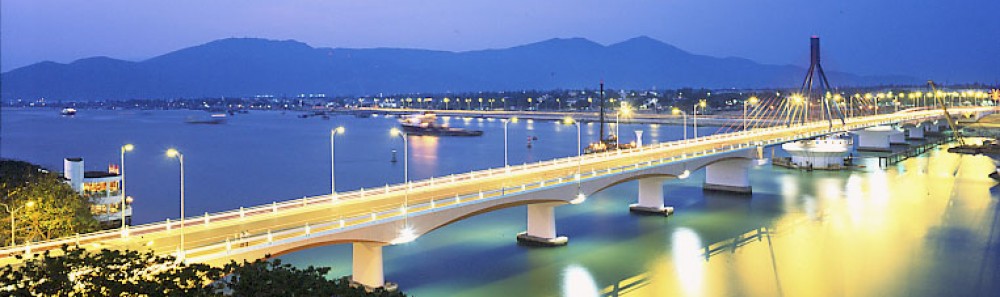
Water, the potential new battleground in Asia

Averting Asian water wars

By BRAHMA CHELLANEY
The Japan Times

As the most pressing resource, water holds the strategic key to peace, public health and prosperity. The battles of yesterday were fought over land. Those of today are over energy. But the battles of tomorrow will be over water. And nowhere else does that prospect look more real than in Asia.

According to a 2006 U.N. report, Asia has less fresh water than any other continent other than Antarctica. In that light, water is emerging as a key challenge for long-term Asian peace and stability.

Although water covers two-thirds of Earth, much of it is too salty for use. Barely 2.5 percent of the world’s water is potentially potable, but two-thirds of that is locked up in the polar icecaps and glaciers. So, less than 1 percent of the total global water is available for consumption by humans and other species.

These freshwater reserves are concentrated in mountain snows, lakes, aquifers and rivers. Already, 1.5 billion people lack ready access to potable water, and 2.5 billion people have no water sanitation services.

In Asia, deforestation, poor management of river basins, environmentally unsustainable irrigation, overuse of groundwater and contamination of water sources have all helped aggravate water woes. The over-exploitation of subterranean water has resulted in a falling water table in several parts of Asia.

Depleting groundwater irreplaceably can dry up wetlands and lakes that depend on such sources. Saline seawater can flow in to replace the fresh water that has been pumped out, as is happening in some Asian coastal areas. In the Gangetic Delta, wells have tapped into naturally occurring arsenic deposits, leading to tens of millions of people in eastern India and Bangladesh being exposed to high levels of arsenic in drinking water and staple agricultural products like rice.

In fact, access to water illustrates the divide today between the rich and the poor in Asia. While the poor struggle to get basic access to water for their daily consumption and household chores, the rich now largely rely on bottled drinking water.

The quality and quantity of available fresh water indeed is becoming a critical component of Asian security-related challenges. Increasingly, dams built on transnational rivers are spurring interstate friction. If wars in the future are to be averted over these and other hydro-engineering projects, international norms and rules will have to be evolved.

With the world’s fastest-rising military expenditures, most-dangerous hot spots and fiercest resource competition, Asia appears as the biggest flash point for water wars — a concern underscored by attempts by some states to exploit their riparian position or dominance. Riparian dominance impervious to international legal principles can create a situation where water allocations to co-riparian states become a function of political fiat.

Upstream dams, barrages, canals and irrigation systems can help fashion water as a political weapon — a weapon that can be wielded overtly in a war, or subtly in peacetime to signal dissatisfaction with a co-riparian state. Even denial of hydrologic data in a critically important season can amount to the use of water as a political tool. Such leverage could in turn prompt a downstream state to build up its military capabilities to help counterbalance the riparian disadvantage.

Except for Japan, Malaysia and Burma, Asian states already face water shortages. The very future of some low-lying states like Bangladesh and the Maldives is at stake due to creeping saltwater incursion, frequent storm-related flooding and the climate change-driven rise of ocean levels. Bangladesh today has too much water, yet not enough to meet its needs. Born in blood in 1971, the world’s seventh-most populous nation faces the specter of a watery grave.

China and India already are water-stressed economies. The spread of irrigated farming and water-intensive industries and a rising middle class are drawing attention to their serious struggle for more water. The two giants have entered an era of perennial water shortages, which before long are likely to parallel, in terms of per capita availability, the scarcity in the Middle East.

Their rapid economic growth could slow in the face of acute water scarcity if their demand for water continues to grow at the present frenetic pace. Water shortages indeed threaten to turn food-exporting China and India into major importers — a development that would seriously accentuate the global food crisis.

Even though India’s usable arable land is larger than China’s — 160.5 million hectares compared to 137.1 million hectares — the source of all the major Indian rivers except the Ganges is the Chinese-held Tibetan plateau. This is the world’s largest plateau, whose vast glaciers, huge underground springs and high altitude have endowed it with the greatest river systems.

Almost all the major rivers of Asia originate there. Tibet’s status thus is unique: No other area in the world is a water repository of such size, serving as a line for much of an entire continent.

Through its control over Tibet, China controls the ecological viability of several major river systems tied to southern and southeastern Asia. But today, China is toying with massive interbasin and inter-river water transfer projects starting from the Tibetan plateau.

Its ongoing "Great South-North Water Transfer Project" is an overly ambitious engineering attempt to take water through man-made canals to its semi-arid north. The diversion of waters from the Tibetan plateau in this project’s third leg is an idea enthusiastically backed by President Hu Jintao, a hydrologist who owes his swift rise in the Communist Party hierarchy to the brutal martial-law crackdown he carried out in Tibet in 1989.

In the stark words of Premier Wen Jiabao, water scarcity "threatens the very survival of the Chinese nation." But in seeking to address that challenge, China’s gargantuan projects threaten to damage the delicate Tibetan ecosystem. They also carry seeds of inter-riparian conflict. The hydropolitics in the Mekong River basin, for example, can only become worse as China, ignoring the concerns of downstream states, completes more upstream dams on the Mekong.

While making halfhearted attempts to staunch Indian fears about the prospective diversion of River Brahmaputra northward, Beijing has identified the bend where the Brahmaputra forms the world’s longest and deepest canyon, just before entering India, as holding the largest untapped reserves for meeting China’s water and energy needs.

A Sino-Indian conflict over the sharing of the Brahmaputra waters would begin no sooner than China began to build the world’s largest hydropower plant on the river’s Great Bend.

Asia will continue to have the largest number of people without basic or adequate access to water. Such water stress in the face of rising demand and poor water management will sharpen competition between urban and rural areas, between neighboring provinces and between nations. As global warming accelerates, local, national and interstate disputes over water will become increasingly common in Asia, making cooperative institutional mechanisms over water resources essential within and between states.

Clearly, the way to forestall or manage water disputes in Asia is to build cooperative river-basin arrangements involving all riparian neighbors. Such institutional arrangements ought to center on transparency, information sharing, pollution control and a pledge not to redirect the natural flow of transboundary rivers or undertake projects that would diminish cross-border water flows. The successful interstate basin agreements (such as over the Indus, the Nile and the Senegal rivers) are founded on such principles.

In the absence of institutionalized cooperation over shared resources, peace would be the casualty in Asia if water became the new battleground. In the ominous words of Wang Shucheng, China’s former minister of water resources: "To fight for every drop of water or die, that is the challenge facing China."

 
Brahma Chellaney is a professor of strategic studies at the privately funded Center for Policy Research in New Delhi.
 
The Japan Times: Thursday, Oct. 2, 2008
(C) All rights reserved

Coping Strategically With Climate Change

Treat Climate Change As Matter of Security


Brahma Chellaney

Covert magazine, October 1-14, 2008


Unlike other unconventional challenges the world faces, climate change is caused not by hostile forces but by our production and consumption patterns. For long, global warming had not been taken seriously, and even the few who did see its threat potential, viewed the matter as simply an environmental or economic issue. Today the silver lining is the ongoing attitudinal shift one sees in countries — from the United States and Australia, to China and Brazil. A prerequisite to any policy shift is an attitudinal shift. In the coming years, we will, hopefully, see policy shifting both at the national and international levels to help promote climate security.


Of course, without a change in U.S. policy, no international counteraction plan can emerge. Given President George W. Bush’s history of obstructionism on this issue despite a grudging admission by him of the human-induced causes of global warming, a more forward-looking U.S. approach would have to await a change of administration in Washington. In the developing world, the attitudinal shift is mirrored in the decision by a number of states to go in for energy-efficiency measures and climate-friendly technologies. The national action plans unveiled by China and India reflect this attitudinal shift. Limiting the scale of the climate problem is paramount. But as history testifies, action does not begin until a widely recognized crisis dawns on the world. And when that happens, it is the political ideas already around that get embraced. So now is a good time to begun formulating practicable proposals to combat climate change.


Fortunately, there is now greater clarity in the world on what needs to be controlled in order to protect the climate. The science of climate change is better developed, although it remains young, with some issues still unsettled. The economics of combating climate change is also now better understood, with the cost-benefit ratio clearly in favour of undertaking counteraction now. It is the politics that continues to lag behind, even as carbon emissions continue to grow 1.8 per cent annually. If the concentration of greenhouse gases in the atmosphere were to be capped by 2030 at 400 parts per million so that the average temperature does not rise beyond 2 degrees Celsius, then concerted global action cannot be put off indefinitely.


Climate policy alone, however, will not solve the climate crisis. Unless we address energy issues, we cannot effectively combat climate change. Today, four-fifths of the world’s energy comes from fossil fuels — coal, oil, natural gas. Given that nearly two-thirds of the greenhouse-gas emissions are due to the way we produce and use energy, we need to focus more on alternate energy policies. This imperative is also being underlined by the manner interstate competition over energy resources is noticeably influencing strategic thinking and military planning. Until we can either replace fossil fuels with cost-effective renewables or other alternative technologies or find practical ways to capture C0² emissions, the world would remain wedded to the fossil-fuel age.


While the reluctance of the rich countries to accept any diminution in their lifestyle comforts is understandable, there is a need to go beyond symbolic approaches. The diversion of food for biofuels, for instance, has only helped create a windfall for major farm industries while burdening the world’s poor. Also, buying carbon credits from poor states to exceed one’s own emission targets is environmental grandstanding, at best, and carbon colonialism, at worst. The Clean Development Mechanism (CDM), set up under the 1997 Kyoto Protocol, has accomplished little more than re-jigger emission rights between the developed and developing worlds.


            The hope was that such carbon trading would allow emission cuts to happen where they are the cheapest. But the evidence thus far is that it has done little more than provide a greener reputation to the states promoting the scheme. The global market in carbon trading now is nearing $40 billion. The bulk of the carbon trading involves the sale of allowances under the European Union’s emissions trading scheme.


To deal with its strategic implications, climate change needs to be embraced as a national security issue — but not in the way the Pentagon has toyed with the development of weather-modification technologies for military applications. Countries, especially in the developing world, ought to start seriously looking at ways they can innovate and get along in a climate change-driven paradigm. It will become imperative to build greater institutional and organizational capacity, along with efficient water management, early warning systems and new farm varieties.


Brahma Chellaney is Professor of Strategic Studies at the Centre for Policy Research, New Delhi.

India’s retarded nuclear deterrent

The Impotent Bomb


Has India’s crucial strategic asset been fatally compromised?


Brahma Chellaney

Covert magazine, September 16-30, 2008


At a time when India’s asymmetry with China in conventional-military capability is becoming wider, India’s need for a reliable nuclear deterrent that can survive a first strike is becoming greater. India imports virtually all its conventional weapons and is in no position to deter China conventionally. Not only are conventional weapons highly expensive, but also no other large country in the world is so dependent on weapon imports to meet basic defence needs as India. The only way India can deter Chinese aggression or threat to use force is through an adequate nuclear-weapons capability.


            Yet, instead of stepping up work on building a credible but minimal nuclear deterrent, Prime Minister Manmohan Singh’s government blithely put India’s nuclear programme — the country’s only strategic asset — on the negotiating table to clinch a civil nuclear deal with the United States. Through this insidious deal, India is accepting qualitative and quantitative constraints on its indigenous deterrent’s development.


            Such fetters come when India has yet to build and deploy even a barely minimal deterrent against China. No government leader has claimed, or can assert, that the country today can effectively deter China, its primary challenge. Indeed, the key task India faces today is to build a stout deterrent, however small, that can help deter an increasingly assertive China that has gone from preaching the gospel of its “peaceful rise” to taking its gloves off.


            India’s priority today should its security. Yet India is compromising its future deterrent capability by concluding a deal with the U.S. whose touted energy benefits are dubious and dispensable. The partisan rancour over the deal has only helped obscure facts, allowing shibboleths and fantasies to substitute for an informed debate on a critical issue. Even as the government attempts to place India’s energy needs above its national defence, myths continue to be repeated untiringly.


The notion that India can build energy “security” through imports of high-priced, foreign fuel-dependent reactors is a travesty of facts. That would be a path to energy insecurity.


Just as cheap oil now appears fanciful, cheap nuclear power for long has been a mirage. More than half a century after then U.S. Atomic Energy Agency Chairman Lewis Strauss claimed that nuclear energy would become “too cheap to meter”, the nuclear power industry everywhere subsists on generous state subsidies. The current electricity-market liberalization trends spell trouble for the global nuclear-power industry because they threaten the state support on which it survives. As a 2005 International Atomic Energy Agency (IAEA) study by Ferenc Toth and Hans-Holger Rogner warns, “nuclear power’s market share might indeed follow a downward trajectory” if state subsidies abate and more cost-effective reactors are not designed.


Other international studies have shown that nuclear power, although a long-matured technology, has demonstrated the slowest rate of learning in comparison to other energy technologies, including newer sources like wind and combined-cycle gas turbines. Instead of the price declining with nuclear power’s maturation, the opposite has happened. Power reactors also remain very capital-intensive, with high up-front capital costs, long lead times for construction and commissioning, and drawn-out amortization periods that discourage private investors.


In the U.S., two separate studies by the University of Chicago (2004) and MIT (2003) showed new nuclear power remaining comparatively more expensive. In India, all the power reactors built since the 1990s have priced their electricity at between 270 and 285 paise per kilowatt hour or higher, despite inbuilt state subsidy. In comparison, the coal-fired Sason plant project in central India \has contracted to sell power at 119 paise per kWh.


            Wishful thinking and official spin, however, are clouding the national discourse, opening the path to damaging compromises on the integrity of the country’s nuclear-deterrent capability. The deal will impede India’s deterrent plans and eliminate the leeway the country enjoyed in 1974 and 1998 when it tested. Dr. Singh, however, pooh-poohs the nuclear-military implications and recites the deal’s supposed energy benefits. His government has also taken to chanting the disarmament mantra, although disarmament fell off the global agenda long ago. The United Nations’ Conference on Disarmament (CD) — the main disarmament negotiating forum — has been bereft of real work for 12 years now.


            India, in fact, has a rich history of floating disarmament proposals that come back and haunt it as non-proliferation pacts. It was India that put forth the ideas of a Nuclear Non-Proliferation Treaty (NPT) and a Comprehensive Test Ban Treaty (CTBT). Add to that its record of not acting when the time is right.


Had India done a test in the mid-1960s when it first acquired nuclear-explosive capability, it would have beaten the NPT trap. Had Indira Gandhi pressed ahead with weaponization after Pokhran I, India would not have faced a rising tide of technology sanctions for the next quarter-century. Had Atal Bihari Vajpayee dangled a test moratorium as a diplomatic carrot post-Pokhran II, instead of gifting it away gratuitously, the U.S. would have hesitated to slap an array of new sanctions on India. And had Manmohan Singh sought to plug the yawning gaps in capability, instead of pushing a divisive deal with the U.S. that offers questionable energy benefits to help neuter India’s deterrent, a more-confident New Delhi today would not have had to propitiate China or any other power.


No country in history has struggled longer to build a minimal deterrent or paid heavier international costs for its nuclear programme than India. Yet, by sheltering behind calcinatory and delusional rhetoric, Dr. Singh overlooks a central reality: In today’s world, another country can impose its demands on India not necessarily by employing direct force but by building such asymmetric capabilities that a credible threat crimps the other side’s room for manoeuvre. Nothing better illustrates this danger than New Delhi’s own political timidity in the face of rising Chinese provocative actions. The government has gone to the extent of needlessly downplaying the increasing cross-border Chinese military incursions. The more India falls behind its minimum-deterrence needs, the more likely will such fecklessness get deeply ingrained in its foreign policy.


            Unlike conventional weapons, systems of nuclear deterrence have to be developed indigenously and without the lure of kickbacks. More than a decade after declaring itself a nuclear-weapons state, India stands out as a reluctant and tentative nuclear power. India’s primary focus remains more on buying high-priced conventional weapons from overseas (reflected in its emergence as a top arms importer in the world) than on plugging gaps in its nuclear deterrence. Consequently, India’s goal of erecting a credible and survivable nuclear deterrent, as the private intelligence service Stratfor put it, is at least a decade away.


            The history of India’s nuclear-explosive programme is actually a record of how it helped mould multilateral technology controls. The 1974 detonation impelled the secret formation of the London suppliers’ club (later renamed the Nuclear Suppliers Club), the reshaping of the non-proliferation regime, and export bans on dual-use items. That test helped remake U.S. policy, spurring major reforms in export policy, the passage of the 1978 Nuclear Non-Proliferation Act (NNPA), the attachment of non-proliferation conditions to foreign assistance, and the emergence of the sanctions approach. India’s space programme helped give birth to the Missile Technology Control Regime (MTCR).


The more India got hit with technology controls, the more it sank into its proverbial indecision, instead of doggedly pressing ahead. Almost a quarter-century passed between Pokhran I and II, as a stock-still India masochistically put up with punitive actions. A decade after Pokhran II, the present leadership is more interested in deal-making than deterrent-building. Exactly 25 years after the Integrated Guided Missile Development Programme (IGMDP) was launched, Dr. Singh’s government has announced its mysterious closure — without a single Beijing-reachable missile in deployment, and even as Pakistan has conducted countless missile tests since last year.


While China ploughs 28 per cent of its mammoth, rapidly-growing military spending into defence research and development, geared toward modernizing its deterrent, India’s total annual budget outlays for the nuclear deterrent make up less than one-tenth of the $11 billion profit in the first quarter of 2008 of one U.S. company, Exxon-Mobil. Yet India does not shy away from squandering several billion dollars annually in importing questionable conventional weapons. Consider some recent examples.


The Indian air force barely inducts the first batch of the British Hawk jet trainer — an obsolescent system in which India invested $1.8 billion ostensibly to help minimize crashes — and a Hawk crashes. No sooner the U.S. had sold India a 1971-vintage amphibious transport ship junked by its navy than a gas leak kills an Indian officer and five sailors on board. Defence Minister A.K. Anthony disclosed, nine months after the delivery date had passed, that Russia wants $1.2 billion more and another three years to deliver a refurbished Soviet-era aircraft carrier that India had agreed to buy for $1.5 billion in early 2004, although it had been rusting since a mid-1990s boiler-room explosion.


            Is India seeking to build a first-rate military with strategic reach and an independent deterrent, or a military that will remain irredeemably dependent on imports and serve as a money-spinning dumping ground for antiquated and junked weapons? The defence of India is becoming an unending scandal just when new threats are emerging and chinks in the Indian armour are obvious. Even indictments by the Comptroller and Auditor General (CAG) seem to make little difference.


            Today, instead of investing in the rapid development of a credible and comprehensive deterrent, New Delhi acts peculiarly. In an action that ominously harks back to the 1991-95 period when Dr. Singh as finance minister starved the nuclear programme of necessary funds for expansion, the government’s 2008-09 budget slashes the funding of the Department of Atomic Energy (DAE) by $529 million. No explanation has been offered to the nation for this action.


            Rather than aim for a technological leap through a crash intercontinental-range ballistic missile (ICBM) programme, India remains stuck in the intermediate-range ballistic missile (IRBM) arena, where its frog-like paces have taken it — nearly two decades after the first Agni test — to Agni-3, a non-strategic missile in deterrence argot. Instead of securing India’s interests on planet earth, the government has embarked on a $3.4 billion lunar dream, preparing excitedly to launch the first lunar orbiter.


            By disproving the prophets of doom and launching the country on a rising trajectory, Pokhran II was supposed to have lifted India from its subaltern mindset and helped focus its energies on deterrent-building. Critics like Dr. Singh had warned in 1988 that the tests would seriously impair the economy. But India’s foreign-exchange reserves multiplied five times in seven years and its GDP growth accelerated sharply. Who looked at India as a rising power before 1998? Pokhran II thus was a watershed. A decade later, however, India doesn’t have much to celebrate. Nuclear diffidence continues to hold it down. It still doesn’t have minimal, let alone, credible deterrence. Its military asymmetry with China has grown to the extent that many in its policymaking community seem to be losing faith in the country’s ability to defend itself with its own means.


            It is against this background that the strategic implications of the nuclear deal must be viewed. The core implications are two-fold. Firstly, the deal will ensure that India stays a second-rate nuclear power, with its stunted, regionally confined capability unable to aid its world-power ambitions. Secondly, more than commercial nuclear power, it is U.S. arms exports and closer strategic ties with India that the deal is likely to promote. In other words, India’s arms-imports dependency will only intensify at the expense of an independent nuclear deterrent.


From the time it was unveiled more than three years ago as an agreement-in-principle, the deal has been anchored in broader strategic objectives — from intelligence sharing and building of interoperability between U.S. and Indian forces, to roping in India as a key player both in the “Global Democracy Initiative” and a disaster-response initiative with military orientation. India has agreed to fully support U.S. non-proliferation initiatives and consider participating in “multinational operations”. New Delhi is now set to sign three agreements that U.S. officials say are critical to forge closer bilateral military ties. These will facilitate cooperation on logistical operations, provide for monitoring of the end uses of transferred weapons systems, and enhance communications interoperability.


Not many will question India’s efforts to build a stronger relationship with the world’s sole superpower. A durable Indo-U.S. partnership is desirable, but it can be built not on Indian strategic obsequiousness or joint opportunism in relation to a third country but on shared national interests. Shared interests mean far more than shared democratic values, which in practice can look very different. For instance, it is a tribute to the vitality of U.S. democracy that Congress is to closely scrutinize the nuclear deal again, after having passed an India-specific legislative waiver — the 2006 Hyde Act. In contrast, the Indian Parliament has had little role to play, although the deal’s actual terms impinge on the long-term credibility of the country’s nuclear deterrent.


New Delhi has agreed to put more than two dozen of its existing nuclear facilities and all its future civilian reactors under international inspections of a kind that only non-nuclear-weapons states accept — invasive, everlasting and legally irrevocable. In addition, India has agreed to shut down by 2010 the newly refurbished Cirus research reactor — the supplier of plutonium for India’s 1974 test and now the source of 30 per cent of the country’s weapons-grade plutonium production. In fact, as Paul Nelson, T. V. K. Woddi and William S. Charlton of the Texas A&M University point out in a U.S. government-funded study, much of India’s cumulative historic production of weapons-grade plutonium has come from Cirus, operating since 1960.


            The Cirus shutdown decision alone disproves the prime minister’s oft-repeated claim that “this deal has no bearing on our strategic programme”. Speaking in the Lok Sabha on March 10, 2006, Dr. Singh contended that, “While the Cirus reactor was refurbished recently, the associated cost will be more than recovered by the isotope [production] and the research we will be conducting before it is closed”. But he still hasn’t answered the key question: Why did he succumb to U.S. pressure over a reactor that remains crucial to India’s strategic programme?


It is true that India is free to build a replacement reactor. But thus far work on a replacement reactor has not begun, even though India needs to sharply accelerate its rate of weapons-grade plutonium production in view of the pressures it faces to declare a production moratorium and support the early conclusion of a Fissile Material Cut-off Treaty (FMCT). The Cirus dismantlement in two years’ time will certainly lead to a significant shortfall in military-grade plutonium production.


Furthermore, the watertight civil-military separation the deal is imposing will destroy what then Atomic Energy Commission Chairman Chidambaram in 1996 described as “the lateral synergy” that exists between these two parts of the Indian nuclear programme. The officially sponsored history of the DAE titled, Atomic Energy in India: 50 Years by C. V. Sundaram et al, quotes Dr. Chidambaram as follows: “India has comprehensive nuclear capability, some of which is latent, some of which we have exercised to a limited degree and some of which we have exercised fully. And this goes over into development of nuclear power reactors, building research reactors, non-electricity applications of radiation, spinoff technologies and also keeping open this nuclear option. And all these are in some fashion linked together. And the kind of lateral synergy which exists between the one and the other is, of course, very difficult to define or identify even for insiders. But it exists. You can’t have one without the other”.


By acquiescing to a status less than that of a nuclear-weapons state even as it retains a nuclear military programme, India can expect the IAEA to enforce fail-safe, verifiable civil-military “firewalls” and maximize its inspectors’ intrusive ability to detect the smallest possible diversion from the civilian sector.  The “Additional Protocol” the IAEA will conclude with India will offer this Agency the means to create such firewalls and deter the transfer of specialized equipment, trained personnel, designs and operating manuals to the strategic programme. With the invasive access it grants, the Additional Protocol is a much-more useful tool for the IAEA than even special inspections.


The deal, with its many eclectic conditions designed to firmly tether India to the U.S.-led international non-proliferation regime, is set to crimp Indian deterrent-building. The Hyde Act, in fact, has less to do with nuclear-energy cooperation and more with seeking to fashion wide-ranging non-proliferation controls on India, including fetters on the Indian nuclear military capability.


While the Hyde Act’s bar on Indian testing is explicit, the one in the NSG waiver is implicit, yet unmistakeable. The NSG waiver is overtly anchored in NSG Guidelines Paragraph 16, which deals with the consequence of “an explosion of a nuclear device”. The waiver’s Section 3(e) refers to this key paragraph, which allows a supplier to call for a special NSG meeting, and seek termination of cooperation, in the event of a test or any other “violation of a supplier-recipient understanding”. The recently leaked Bush administration letter to Congress has cited how this Paragraph 16 rule will effectively bind India to the Hyde Act’s conditions on the pain of a U.S.-sponsored cut-off of all multilateral cooperation. India will not be able to escape from the U.S.-set conditions by turning to other suppliers.


Both the U.S.-legislative and NSG waivers aim to constrict the Indian deterrent’s space by subjecting Indian actions and activities to the glare of international scrutiny. While the Hyde Act demands that “the President shall keep the appropriate congressional committees fully and currently informed” about “significant changes in the production by India of nuclear weapons or in the types or amounts of fissile material produced”, the NSG is to regularly “confer and consult” with India on “all aspects” of its pledges. Contrast this with Dr. Singh’s assurance to the Rajya Sabha on August 17, 2006: “We have made clear to the U.S. that India’s strategic programme is totally outside the purview of the July Statement, and we oppose any legislative provisions that mandate scrutiny of either our nuclear-weapons programme or our unsafeguarded nuclear facilities”.

Dr. Singh is willing to bring the deal into force despite the U.S. making it explicit that if an Indian government tested, fuel and spare-part supplies and other cooperation would cease “immediately”. He is also willing to saddle the country with a host of legally irrevocable obligations — from accepting permanent international inspections on all its civilian facilities to adhering to U.S.-led cartels from which India has been excluded. There were no such conditions when India first entered into civil nuclear cooperation with the U.S. in 1963. Yet, when America unilaterally walked out of its 123 Agreement with India in 1978, why did New Delhi not exercise its right to terminate IAEA inspections at Tarapur, the sole plant set up under that accord?

Declassified U.S. documents show that the CIA had correctly assessed that India would not end its obligations even after America had broken its word, but instead would seek U.S. help to find a substitute fuel supplier to keep electricity flowing to the Mumbai region. That is exactly what happened. In that light, ask yourself: Having invested tens of billions of dollars in importing a series of nuclear power reactors and having created electricity dependency, would India be able to test, when the basis of new cooperation is an explicit test prohibition written into Hyde Act’s Section 106, an unequivocal U.S. “right of return” enshrined in the 123 Agreement’s Article 14(4), and the threat of multilateral sanctions manifest in the NSG’s Paragraph 16 rule?


Recent developments are a testament to the fact that the powerful anti-deterrent lobby within India has not fully reconciled to the country’s overt nuclearization. A reminder of that came four months ago when no government celebrations marked the 10th anniversary of India going nuclear. Forced to accept India’s nuclear-weapons-state status as a fait accompli, this lot is indifferent to the long-term strategic implications of the nuclear deal.


It is worth pausing to remember that no nation can be a major power without three attributes: (i) a high level of autonomous and innovative technological capability; (ii) a capacity to meet basic defence needs indigenously; and (iii) a capability to project power far beyond its borders, especially through intercontinental-range weaponry. With its strategic-vision deficit compounded by a leadership deficit, India’s deficiencies in all the three areas are no secret.


If this deal takes effect, India can forget about emerging as a full-fledged nuclear-weapons state or a strategic peer to China. At best it will be a mediocre nuclear power whose quest for a credible minimal deterrent will be locked at the level of a retarded undersized deterrent, with functionality equivalent to a mentally challenged child.


Brahma Chellaney, a professor of strategic studies at the Centre for Policy Research in New Delhi, is the author, most recently, of Asian Juggernaut: The Rise of China, India and Japan (HarperCollins, 2007).


http://www.covert.co.in/brahma.htm

Playing Injured Innocence on Nuke Deal

Blunder, then blame the United States


There is nothing new in the latest U.S. statements on key nuclear deal-related issues — from fuel-supply and reprocessing conditions to denial of dual-use technologies and assertion of a unilateral right to suspend cooperation forthwith. Yet, New Delhi now is unfairly accusing Washington of reinterpreting the terms.


Brahma Chellaney

Asian Age, September 22, 2008


The nuclear deal now on offer creates a Tarapur-style trap of gargantuan dimensions. The deal’s terms are far worse than the agreement under which the U.S.-built Tarapur nuclear power station was set up in the 1960s. Yet, New Delhi is entering into a new deal without resolving the long-festering Tarapur imbroglio, symbolized by the spent fuel that has been accumulating there for 37 years, with the U.S. asserting a veto on Indian reprocessing and refusing to grant consent.


Disputes over the latest deal are flaring up even before it has been legalized, with New Delhi starting the blame game in earnest. Through its pet stooges in the media, it has accused Washington in recent days of “unilaterally altering the ground rules”, of “repudiating fuel-supply assurances”, of “introducing a dangerous new interpretation” on reprocessing, and of “robbing the deal of its essence”.


Playing injured innocence, however, just doesn’t wash. The fact is that while Washington has been consistent, candid and hard-nosed on the deal since 2005, New Delhi played a game of public deception all along, hoping its charade would not be uncovered. But now that it has run out of covers to cloak its ever-widening field of distortions, blaming America has become easy.


The revelations that spring from President George W. Bush’s latest “Hyde Package” to Congress and his administration’s leaked letter to a congressional panel are entirely consistent with earlier U.S. official statements as well as with the provisions of the Hyde Act and the 123 agreement. There is nothing new. Yet, the U.S. today is being accused of seeking to rewrite or reinterpret the deal’s terms. Consider the following:


The U.S. gave no guarantee of reactor-lifetime fuel supply or to help India build a strategic fuel reserve. Bush’s recent statement that American fuel-supply assurances are “not legally binding” is no different than past assertions by other U.S. officials. For instance, then U.S. Undersecretary Nicholas Burns clarified in July 2007 that none of the U.S. fuel assurances in the 123 accord “contradicts or conflicts with the legal right of any American President” to terminate supply and demand the return of supplied materials if India breached the U.S.-prescribed conditions.


The 123 agreement, significantly, makes no mention of the term, “lifetime”. It offers assured fuel supply only so long as India adheres to the stipulated conditions. Supply assurance, as the Hyde Act decrees, can cover only disruption due to market failure or technical problems, but not sanctions arising from India’s non-compliance. Burns, asked in an August 2, 2007 interview if America was committed to arranging alternative fuel supply if India tested, replied: “That’s absolutely false”. The Hyde Act indeed demands that India be prevented from building any fuel stockpile of a size that would permit its “riding out any sanctions that might be imposed” by the U.S. in the future.


Bush’s assertions on no upfront or permanent reprocessing consent to India are in line with what his officials said earlier. Nicholas Burns, for instance, announced the following at a July 27, 2007 news conference: one, there is no timeframe within which the U.S. intends to grant India an operational consent to reprocess; and two, India has first to build a new “state-of-the-art” reprocessing facility to U.S. satisfaction before special “arrangements and procedures” for reprocessing can be worked out.


India inexplicably agreed to negotiate a separate Section 131 agreement on reprocessing later — an accord that will need to pass congressional muster — although Washington granted Japan and EURATOM the actual right to reprocess upfront in a 123 agreement. For example, the 1987 Japan-U.S. 123 accord was accompanied by a nine-page “implementing agreement” that gave effect to “advance, long-term consent for reprocessing, transfers, alteration and storage of nuclear material” by spelling out the reprocessing-related arrangements.


In fact, New Delhi has gratuitously agreed to route all “foreign nuclear material” through a new reprocessing facility. As a result, even France is unwilling to grant India reprocessing right upfront at this stage.


The recent U.S. disclosure that India has agreed to inspections beyond those by the International Atomic Energy Agency is consistent with the Hyde Act’s stipulation for “fall-back U.S. safeguards” and with the 123 agreement’s Article 10(4). The revelation shatters the Prime Minister’s assurance to Parliament that “we will accept only IAEA safeguards” and that “there is no question of accepting other verification measures or … allowing American inspectors to roam around our nuclear facilities”.


The U.S. publicized intent to deny India sensitive and other dual-use technologies even under safeguards is no surprise. Washington had made it clear by 2006 that, despite originally committing to “full civil nuclear trade with India”, its cooperation in practice would be less than full. The U.S. indeed concluded a 123 accord with India more restrictive than its existing cooperation agreements with Australia, Japan and South Korea.


Piteously, India will not able to import any components for the special reprocessing facility it has agreed to build to U.S. expectations, because its negotiators failed to persuade America to relax civil reprocessing, enrichment and heavy-water sanctions.


The Prime Minister had pledged in Parliament: “Before voluntarily placing our civilian facilities under IAEA safeguards, we will ensure all restrictions on India have been lifted”. That pledge he is set to break.


The recent U.S. affirmation of an unfettered right to suspend all supplies forthwith meshes with the 123 agreement’s provisions. That accord only demands the serving of a one-year termination notice on any ground, however extraneous. Suspension of supplies can follow immediately.


For the U.S., such an unconstrained right was vital to tether New Delhi to the Hyde Act, an India-specific NPT. In congressional testimony last Thursday, the Bush administration again affirmed that “whether it’s a test or an abrogation of a safeguards agreement, our actions will be bound by U.S. law”. Latest U.S. statements on testing (such as, “the Indian government intends to uphold the continuation of the test moratorium”) suggest that New Delhi has given its word to Washington never to test again.


Once the deal takes effect, the Hyde Act’s post-implementation conditions will also kick in — from an annual presidential certification of Indian good behaviour to pressing India’s “full compliance” with a non-nuclear, U.S.-led cartel like the Missile Technology Control Regime.


Against this background, can the U.S. be accused of leading up the garden path an India that was beseeching to be taken into a blind alley? Shouldn’t New Delhi, in all fairness, acknowledge Washington’s long-held position that a 123 agreement with any state is neither a treaty nor has force under the Vienna Convention on the Law of Treaties (which the U.S. hasn’t even ratified)?


Many of the accusations now being hurled by surrogacy are actually part of a public-relations exercise by New Delhi to dissuade the congressional attachment of more conditions during the ongoing ratification process. Despite threats to turn its back on the U.S. and do business only with France and Russia, New Delhi will dare not displease Washington. Continued cooperation under the deal hinges on India meeting its panoply of non-proliferation commitments that extend far beyond a test moratorium. The U.S. could make life difficult for India at any time through an unfavourable assessment of its progress in meeting those commitments.


(c) The Asian Age, 2008.

Lessons for today’s India from the 1962 Chinese invasion

The Art of War


Jawaharlal Nehru blundered when it came to China. There are serious lessons to be learnt from him — especially today.


Review by Brahma Chellaney

The Hindustan Times, September 21, 2008


BOOK OF THE WEEK

Are We Deceiving Ourselves Again? Lessons the Chinese Taught Pandit Nehru But Which We Still Refuse to Learn

Arun Shourie

ASA/Rupa
Rs. 395, Pages 214


India and China are both adept at playing with numbers. While China invented the abacus, India conceived the binary and the decimal systems. But India, having forsaken the Kautilyan principles, has proven no match to China’s Sun Tzu-style statecraft. As a result, India has found itself repeatedly betrayed. Indeed, it wasn’t geography but guns — the sudden occupation of the traditional buffer, Tibet, soon after the communists seized power in Beijing — that made China India’s neighbour. Jawaharlal Nehru later admitted he didn’t anticipate the swiftness of the Chinese takeover of Tibet because he had been “led to believe by the Chinese foreign office that the Chinese would settle the future of Tibet in a peaceful manner”.

            Shourie’s well-researched, powerfully written book — his 24th in an extraordinary career that has spanned academics, journalism and politics — relies on Nehru’s letters, speeches, notes and other correspondence to bring out the significance, in Nehru’s own words, of the events from the 1950-51 fall of Tibet to China’s 1962 invasion. The author then draws 31 lessons from those developments for today’s India.

After all, there are important parallels, as Shourie points out, between the situation pre-1962 and the situation now. Border talks are regressing, Chinese claims on Indian territories are becoming publicly assertive, Chinese cross-border incursions are rising, and India’s China policy is becoming feckless. Indeed, what stands out in the history of Sino-Indian disputes is that India has always been on the defensive against a country that first moved its frontiers hundreds of miles south by annexing Tibet, then furtively nibbled at Indian territories before waging open war, and now lays claims to additional Indian territories. By contrast, on neuralgic subjects like Tibet, Beijing’s public language still matches the crudeness and callousness with which it sought in 1962, in Premier Zhou Enlai’s words, to “teach India a lesson”.

India’s crushing rout in 1962 hastened the death of Nehru, “a fervent patriot,” according to Shourie, who “misled himself and thereby brought severe trauma upon the country, a country that he loved and served with such ardour”. The defeat transformed Nehru from a world statesman to a beaten, shattered politician.


            A classic example of Nehru’s self-delusion cited by the author is the following note he wrote on July 9, 1949, to the country’s top career diplomat: “Whatever may be the ultimate fate of Tibet in relation to China, I think there is practically no chance of any military danger to India arising from any change in Tibet.  Geographically, this is very difficult and practically it would be a foolish adventure.  If India is to be influenced or an attempt made to bring pressure on her, Tibet is not the route for it.  I do not think there is any necessity for our defence ministry, or any part of it, to consider possible military repercussions on the India-Tibetan frontier.  The event is remote and may not arise at all”.


            What Nehru naively saw as a “foolish adventure” was mounted within months by China. What Nehru asserted was geographically impracticable became a geopolitical reality that has impacted on Indian security like no other development since the 20th century.


            Right up to 1949, Nehru kept referring to the “Tibetan government” and to Tibet and India as “our two countries”. But no sooner had China begun gobbling up Tibet than Nehru’s stance changed. He started advising Tibetan representatives, as Shourie brings out, to go to Beijing and plead for autonomy. By 1954, through the infamous “Panchsheel Agreement”, Nehru had not only surrendered India’s extra-territorial rights in Tibet but also recognized “the Tibet region of China” — without securing any quid pro quo, such as the Chinese acceptance of the McMahon Line.

From Nehru’s grudging acceptance of Chinese suzerainty to Atal Bihari Vajpayee’s blithe acceptance of full Chinese sovereignty, India has incrementally shed its main card — Tibet — and thereby allowed the aggressor state to shift the spotlight from its annexation of Tibet and Aksai Chin to its newly assertive claims on Arunachal Pradesh. The irony is that by laying claims to additional Indian territories on the basis of their purported ties to Tibet, China blatantly plays the Tibet card against India, going to the extent of citing the birth in Tawang of one of the earlier Dalai Lamas, a politico-religious institution it has systematically sought to destroy. Yet India remains coy to play the Tibet card against China.

The sum effect of failing to use Tibet as a bargaining chip has been that India first lost Aksai Chin, then more territory in 1962 and now is seeking to fend off Chinese claims to Arunachal Pradesh. And as Shourie reminds his readers, India has still to grasp that the Chinese modus operandi of promising a peaceful settlement and then employing force to change facts on the ground is an old practice. The lessons he paints — from not running policy on hope to ensuring peace by building capability to defend peace — are words of warning no leadership ought to ignore.

Shourie’s book is a call for a down-the-earth Indian policy which, without pushing any panic buttons, begins to build better Himalayan security and countervailing leverage to ensure that China’s growing power does not slide into arrogance and renewed aggression. After all, China’s dramatic rise as a world power in just one generation under authoritarian rule represents the first direct challenge to liberal democracy since the rise of fascism in the 1930s. But just as India has been battered by growing terrorism because of its location next to the global epicentre of terror, it could bear the brunt from its geographical proximity to an increasingly assertive China.

Brahma Chellaney is a political commentator

http://www.hindustantimes.com/StoryPage/StoryPage.aspx?id=cecc03dd-2d15-417e-8817-16cb0ca4b7fa


Shanghai Daily on Professor Brahma Chellaney’s speech

Asia’s deep water crisis and elusive solutions

Wan Lixin

OPINION PAGE Shanghai Daily Thursday 11 September 2008

WHILE many wars of last century were fought over oil, the wars of this century will be waged over water.

This vision had been visited several times during the Konrad-Adenauer-Stiftung seminar “The Strategic Importance of Water in Asia,” held in Bali, Indonesia, August 21-23. There cannot be a better place than Asia to hold this seminar.

According to a 2006 United Nations report, Asia has less fresh water than any other continent outside of Antarctica. In his speech “Averting water wars in Asia,” Brahma Chellaney elaborated on the implications of this imminent energy and water crisis, with a strong emphasis on the situation confronting China and India. Chellaney is professor of strategic studies at the Center for Policy Research in New Delhi, India.

It is well known that Asia is emerging as the world’s main creditor and economic engine.

Chellaney said that unlike the past situation, the qualitative reordering of world power now underway is not due to battlefield victories or military realignments but to a peaceful factor unique to the modern world: Rapid economic growth. Economists tend to explain this rapid rise in terms of labor costs and capital inflow. But fundamentally it represents the triumph of consumerism that effectively overcomes our traditional inhibitions and distrust towards unnecessary spending.

When this consumption aspiration manifests itself in such progressive epithets as GDP growth and modernization, the whole nation becomes co-opted into this process. Consuming easily becomes a sweeping force that quickly neutralizes ideological differences, as we usher in the so-called\ “Pax Americana.”

But as Chellaney sees it, Asia’s success is threatened by resource constraints — especially water and energy. “Water shortages in much of Asia are becoming a threat to rapid economic modernization,” Chellaney said. Or maybe more accurately, Asia’s rapid economic modernization is worsening water shortages in much of Asia.

Anyway, in this new game of globalization, the niche assigned to some Asian countries is to export their resources — and clean air and water — for dollars that are becoming cheaper by the day.

Instead of embarking on an uncertain journey of finding a “fix” in Asia for the economy to continue its impressive growth and to head off a slump, the real solution can be conceptual, starting with, for instance, what is implied in “progress.’’

Chellaney noted that in emerging economies there is a growing middle class seeking high water-consuming comforts like dishwashers and washing machines. This can be a very important observation, depending on the moral to be derived from it. If 10 percent of Asian people begin to use airconditioners, 20 percent begin to drive cars and 30 percent begin to use flush toilets, it will be interesting to assess the environmental implications.

As Chellaney pointed out, despite the fact that total consumption of energy in the Asia-Pacific has grown by 70 percent between 1992 and 2005, per capita energy consumption is still relatively low by international standards: 749 kilograms of oil equivalent (kgoe) in 2005, compared with the global average of 1,071 kgoe. According to a UN report, although household water consumption in Asia is rising rapidly, not many Asians can aspire to the lifestyle of Americans who daily use more than 2.5 times the average in Asia. Citing a McKinsey Quarterly article, Chellaney noted that “On the supply side, Asia’s strong demand environment for energy and basic materials, coupled with its low labor costs, mean that the region will increasingly become a global producer of aluminum, chemicals, paper, and steel.”

It becomes apparent that water-related issues will worsen steadily even in the most conservative scenarios.

Many still pin hope for our future on a wonder technology that would magically meet our current needs for resources without further compromising our environment.

Chellaney chimed in by observing, “Human adaptation and technological innovation will increasingly hold the key to dealing with water-related challenges.” Or would the answer lie in a new outlook and a humble perception of the niche assigned to human race in the whole ecosystem?

Both India and China have been grossly neglected in terms of their cultural legacy, and deliberately overestimated in terms of their manufacturing capacity. In an article published on September 4 in Xinmin Evening News, well-known Sanskrit scholar Ji Xianlin, citing accelerating ecological deterioration, compared our plight to “a blind man riding a blind horse in total darkness already teetering on the edge of a precipice.”

“Some people still dream of averting the crisis by resorting to Western sciences, and I think this is totally impossible. This catastrophe has been caused in the first place by nature-conquering Western sciences,” he wrote.

Such flashes of insight, regretfully, are discordant with the all-consuming optimism, boosterism and cheerleading that deafens us. Given this situation, talks of safeguarding energy supplies and maximizing resource conservation and efficiency can easily degenerate into excuses for not taking more drastic actions that the situation urgently deserves.

Both China and India are already water-stressed economies, and both nations have shared cultural legacy and values that can constitute medicine for the spreading cancer of consumerism.  

www.shanghaidaily.com/opinion

Messy terms of U.S.-India nuclear deal to discourage private investors

Hope overwhelms reality on U.S.-India nuclear deal

By BRAHMA CHELLANEY

The Japan Times, September 17, 2008


The controversy that has dogged the vaunted U.S.-Indian civil nuclear deal is unlikely to dissipate anytime soon despite the recent rule change by the Nuclear Suppliers’ Group. Deep-seated partisan rancor in India over the deal and the still-needed U.S. congressional ratification will ensure that. But more than commercial nuclear power, it is U.S. arms exports and closer strategic ties with India that the deal is likely to promote.

From the time it was unveiled more than three years ago as an agreement-in-principle, the deal has been anchored in broader strategic objectives — from intelligence sharing and building of interoperability between U.S. and Indian forces, to roping in India as a key player both in the "Global Democracy Initiative" and a disaster-response initiative with military orientation. India has agreed to fully support American nonproliferation initiatives and consider participating in U.S.-led "multinational operations."

As a thank you for the role U.S. President George W. Bush and Secretary of State Condoleezza Rice personally played in getting the suppliers’ group to exempt India from its rules, Prime Minister Manmohan Singh is expected to shortly sign three agreements that U.S. officials say are crucial to forge closer bilateral military ties. One is a logistic support accord, another is to provide for end-use monitoring of transferred weapons systems, and the third is to promote military-communications interoperability.

In addition to the orders it has placed recently for American maritime reconnaissance aircraft and military transport planes, India is gearing up to buy other American weapons systems. If Congress ratifies the nuclear deal, America is likely to clinch the contract — amid intense competition involving several countries — to sell India 126 fighter-jets for $10 billion. In this contest, Lockheed Martin has pitched its F-16 against Boeing’s F/A-18E/F Super Hornet.

As a recently leaked Bush administration letter to Congress states, the deal will also help revive the U.S. nuclear-power industry through exports and "access to Indian nuclear infrastructure," allowing "U.S. companies to build reactors more competitively here and in the rest of the world — not just in India."

With its acute shortage of nuclear engineers, the U.S. intends to tap India’s vast technical manpower. The hype over the deal, however, needs to be tempered by certain realities. India’s growing geopolitical weight, high economic- growth rate, abundant market opportunities and status as a key "swing state" in the emerging international order have helped increase its profile in U.S. policy. But too much is made of America’s desire to use India to hold China in check.

First, a durable U.S.-India partnership cannot be built on strategic opportunism in relation to a third country but rather on shared national interests.

Shared interests mean far more than shared democratic values, which in practice can look very different. For instance, it is a tribute to the vitality of U.S. democracy that Congress is to closely scrutinize the nuclear deal again, after having passed an India-specific legislative waiver — the 2006 Hyde Act. This means Congress will have a second look at the deal.

In contrast, the Indian Parliament has had little role to play in the deal, although its conditions bring India within the constraints of the U.S.-led nonproliferation regime, impinging on the long-term credibility of the country’s nuclear deterrent. New Delhi has agreed to put more than two dozen of its existing nuclear facilities and all its future civilian reactors under permanent, invasive and legally irrevocable international inspections — the kind that only nonnuclear-weapons states accept.

In addition, it has agreed to shut down by 2010 the newly refurbished Cirus research reactor — the supplier of plutonium for India’s 1974 test and now the source of 30 percent of the country’s weapons-grade plutonium production.

Second, it appears unlikely that India will allow itself to be used as a foil against an increasingly assertive China, lest Beijing step up its direct and surrogate military pressures.

In the coming years, India will increasingly be aligned with the West economically. But strategically it can avail itself of multiple options, even as it moves from nonalignment to a contemporary, globalized practicality. In keeping with its long-standing preference for policy independence, India is likely to retain the option to forge different partnerships with varied players to pursue a variety of interests in diverse settings.

That means that from being nonaligned, India is likely to become multi-aligned. Also, even with the deal, nuclear power will continue to play a modest role in India’s energy mix. With the proposed import of eight 1,000-megawatt reactors within the next four years, the share of nuclear power in India’s electricity generation is unlikely to rise above the current 2.5 percent.

Not only is the share of other energy sources rising faster in India, but the first of the new imported power reactors — because of the long lead time required for construction and commissioning — won’t start producing electricity until almost a decade from now. The notion that India can build energy "security" through imports of high-priced, foreign fuel-dependent reactors is an absurdity.

Moreover, just as cheap oil now appears fanciful, cheap nuclear power has long been a mirage. More than half a century after then U.S. Atomic Energy Agency Chairman Lewis Strauss claimed that nuclear energy would become "too cheap to meter," the nuclear power industry everywhere subsists on generous state subsidies.

The current electricity-market liberalization trends spell trouble for the global nuclear-power industry because they threaten the state support on which it survives. As a 2005 International Atomic Energy Agency study by Ferenc Toth and Hans-Holger Rogner warns, "nuclear power’s market share might indeed follow a downward trajectory" if state subsidies abate and more cost-effective reactors are not designed.

Nuclear power reactors also remain very capital-intensive, with high up-front capital costs, long lead times for construction and commissioning, and drawn-out amortization periods that discourage private investors. Three factors are likely to discourage private foreign investment in Indian nuclear power.

The first is the deal’s messy terms. To allay deep-seated nonproliferation concerns and build bipartisan support in Congress and consensus in the suppliers’ group, the U.S. legislative and multilateral waivers for cooperation with nuclear-armed India have come with an array of conditions, some explicit, some implicit. Making matters worse, some issues have not been fully clarified but left hanging to allow the beleaguered Indian government to save face at home.

The second is political uncertainty in India, where national elections are approaching. Several parties have vowed to review or renegotiate the deal if voted into power. Having lost one state election after another in recent years, the ruling Congress Party’s prospects of returning to office are not bright.

If the U.S. Congress is unable to ratify the deal in a rushed process this month, the matter will be left to the next administration in Washington, with a new Indian government possibly seeking to reopen the terms.

Yet another factor is the continuing disarray that marks the Indian electricity market and energy policy. The nuclear-power industry in India is state run and subsists on generous government subsidies. But even the subsidized price of nuclear electricity is higher than the cost from most other energy sources.

It is not clear to what extent the next Indian government will be able to guarantee similar subsidies or provide full accident-liability and regulatory-delay cover to encourage private investment at a time when the country is trying to promote electricity-market liberalization. In fact, to allow private players in the nuclear-power industry, India will have to amend its Atomic Energy Act in a process that would subject the deal finally to parliamentary scrutiny, even if belatedly.

Brahma Chellaney, a professor of strategic studies at the privately funded Center for Policy Research in New Delhi, is the author, among others, of "Nuclear Proliferation: The U.S.-India Conflict."


The Japan Times: Wednesday, Sept. 17, 2008
(C) All rights reserved